Peptides UK | Peptide Knowledge Hub
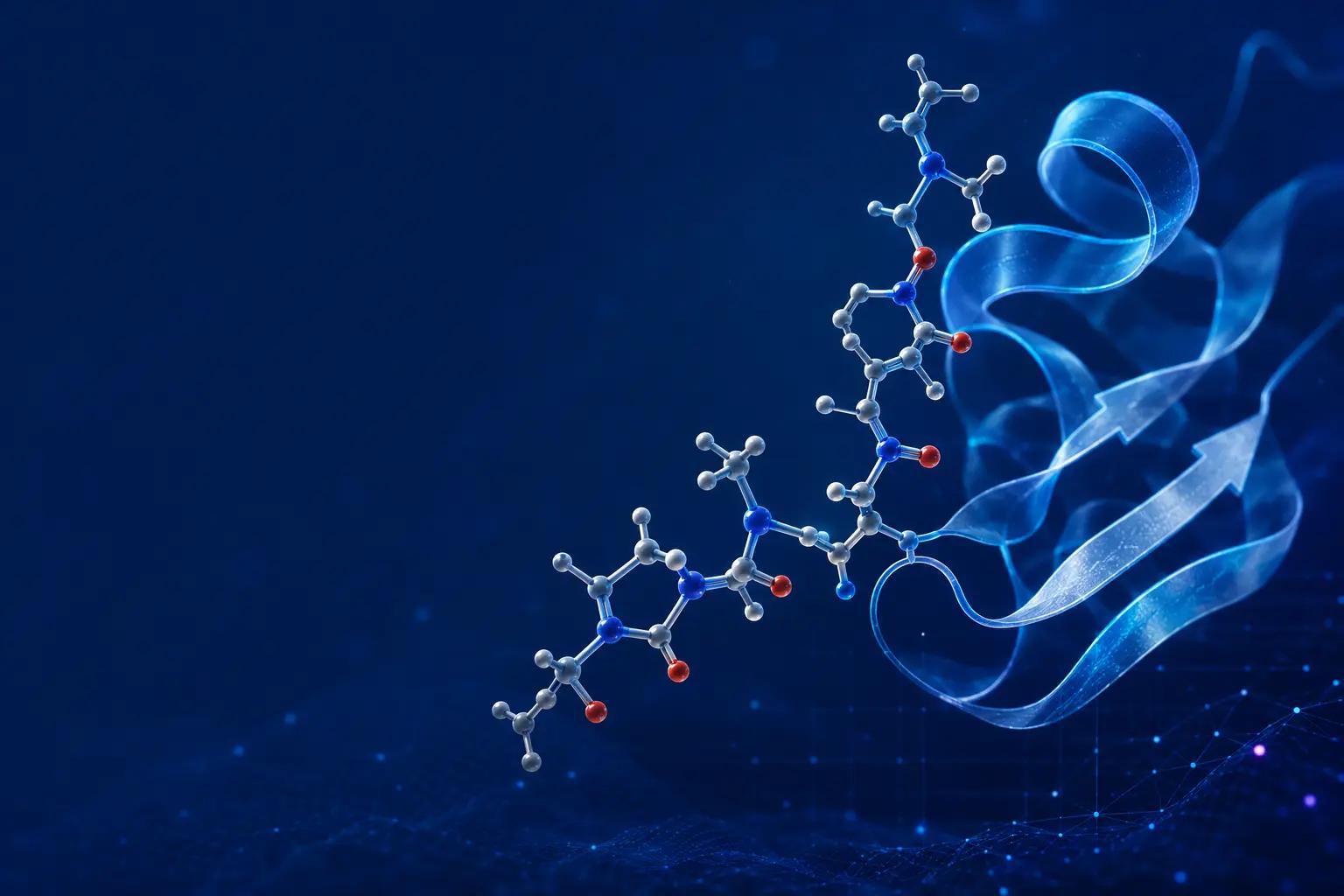
Peptides have become an important focus of modern biotechnology, supporting scientific developments across molecular biology, analytical chemistry, pharmaceutical research and biomaterials engineering.
These relatively small chains of amino acids play diverse roles in biological systems, from transmitting signals between cells to participating in molecular recognition and biochemical regulation.
But why are peptides important in modern biotechnology, and what makes them such valuable tools for scientific research?
The answer lies in their structural diversity, biological functions and the ability of researchers to design and manufacture specific amino acid sequences.
In this guide, Peptides UK explores the role of peptides in biotechnology, their scientific applications and the technologies helping researchers investigate their potential.
What Are Peptides?
Peptides are molecules made from two or more amino acids connected by chemical bonds known as peptide bonds.
Amino acids are the fundamental building blocks of peptides and proteins.
The order of amino acids within a peptide is known as its primary structure or peptide sequence.
This sequence influences the molecule’s chemical properties, three-dimensional structure and interactions with other substances.
Peptides occur naturally in living organisms and can also be manufactured synthetically.
Although peptides are generally shorter than proteins, there is no universally accepted amino acid length that separates the two categories.
Their structural diversity makes peptides useful in many areas of biological and chemical research.
Why Are Peptides Valuable in Biotechnology?
Peptides offer several characteristics that make them useful scientific tools.
These include:
- Defined molecular structures: Researchers can investigate specific amino acid sequences and chemical modifications.
- Biological relevance: Many peptides participate naturally in cellular signalling and other biochemical processes.
- Chemical versatility: Peptide sequences can be modified to explore different molecular properties.
- Synthetic accessibility: Many peptides can be manufactured using established chemical synthesis methods.
- Molecular recognition: Certain peptides interact selectively with receptors, enzymes or other biological targets.
- Research flexibility: Peptides can be used in analytical assays, molecular models and experimental biotechnology systems.
These characteristics do not mean every peptide is easy to manufacture, stable or biologically active.
Their usefulness depends on the properties of the individual molecule and the requirements of the scientific application.
1. Peptides in Molecular Biology
One of the most important applications of peptides in biotechnology is the investigation of molecular and cellular processes.
Many naturally occurring peptides function as signalling molecules.
They help cells communicate by interacting with specific receptors or other molecular targets.
Examples of naturally occurring peptide hormones include:
Oxytocin: Involved in childbirth, lactation and other physiological processes.
Vasopressin: Participates in regulating water balance.
Glucagon: Contributes to the regulation of blood glucose.
By studying these molecules, researchers can investigate how biological signals are recognised and transmitted.
Synthetic peptides can also serve as experimental tools for examining particular molecular interactions.
2. Peptides in Receptor Research
Peptide receptors are proteins that recognise and interact with particular peptide molecules.
Many are located in cell membranes, where they detect signals from outside the cell.
When a compatible peptide binds to a receptor, the interaction may activate, inhibit or otherwise modify receptor activity.
This can influence intracellular signalling pathways.
Why Is Receptor Research Important?
Researchers investigate peptide-receptor interactions to understand:
- Molecular recognition
- Receptor binding affinity
- Receptor selectivity
- Cellular signalling mechanisms
- Structure–activity relationships
- Receptor regulation and desensitisation
These studies contribute to fundamental biology and early-stage pharmaceutical research.
However, receptor binding or activation observed in a laboratory does not establish clinical effectiveness or safety.
3. Peptides in Pharmaceutical Research
Peptides are important subjects of pharmaceutical research because some interact with biological targets involved in physiological regulation.
Scientists investigate peptide molecules during drug discovery to understand their chemical properties and potential biological activities.
Research may involve:
- Identifying suitable molecular targets
- Designing peptide sequences
- Investigating receptor interactions
- Measuring stability
- Studying molecular degradation
- Evaluating experimental biological responses
Are Peptide-Based Medicines Already Used?
Yes.
Some peptide-based medicines have received regulatory approval for specific medical indications.
Examples include certain insulin preparations, glucagon-based products and GLP-1 receptor agonists.
However, approved peptide medicines and experimental research peptides are not interchangeable.
Each medicine must be evaluated according to its specific composition, manufacturing standards, clinical evidence and regulatory authorisation.
Many investigational peptides have not been established as safe or effective for human use.
4. Peptides in Drug Discovery and Molecular Design
Modern biotechnology allows scientists to investigate how changes in peptide structure influence molecular behaviour.
This field is often described through structure–activity relationship (SAR) research.
Researchers may compare related peptide sequences to determine whether changes in amino acid composition affect a particular experimental measurement.
For example, scientists may investigate:
- Receptor binding
- Molecular stability
- Solubility
- Enzyme interactions
- Structural flexibility
- Resistance to degradation
Computational modelling can help generate hypotheses about molecular interactions.
These predictions are then assessed using suitable experimental methods.
Peptide design is an iterative research process, and promising laboratory findings do not guarantee successful clinical development.
5. Peptides in Diagnostics and Laboratory Testing
Peptides can also be used in diagnostic technology and analytical research.
Some synthetic peptides are designed to represent particular regions of larger proteins.
These peptide fragments may be used to investigate molecular recognition by antibodies or other binding partners.
Peptide-Based Assays
Peptides may be incorporated into laboratory assays that examine specific biochemical interactions.
For example, synthetic peptide antigens can be used in certain immunoassay formats.
Their usefulness depends on whether the selected peptide accurately represents a relevant molecular feature.
Peptide Microarrays
Peptide microarrays contain collections of defined peptide sequences arranged on a surface.
Researchers can use them to investigate interactions between peptides and antibodies, enzymes or other molecules.
These systems support research in areas such as immunology and molecular recognition.
Analytical Standards
Characterised synthetic peptides can also serve as reference materials in analytical methods.
They may help researchers identify specific compounds or assess instrument performance under defined conditions.
6. Peptides in Protein Research
Peptides are valuable tools for studying larger proteins.
Scientists can investigate short regions of a protein by synthesising corresponding peptide fragments.
This approach can help researchers examine:
- Protein interaction sites
- Enzyme recognition sequences
- Antibody-binding regions
- Post-translational modifications
- Protein structure–function relationships
For example, researchers may use synthetic peptides to investigate how a particular enzyme recognises and modifies an amino acid sequence.
However, an isolated peptide fragment may behave differently from the same sequence within a complete folded protein.
Experimental results therefore require appropriate interpretation.
7. Peptides in Biomaterials and Tissue Engineering Research
Peptides are also being investigated in materials science.
Certain peptide sequences can organise into larger structures through non-covalent molecular interactions.
This behaviour is known as self-assembly.
Depending on their molecular properties and environmental conditions, self-assembling peptides may form structures such as fibres, sheets or hydrogels.
What Are Peptide Hydrogels?
Hydrogels are networks of molecules capable of retaining substantial quantities of water.
Some peptide-based hydrogels are being investigated as experimental biomaterials.
Research applications include:
- Three-dimensional cell culture systems
- Laboratory tissue models
- Biomaterial scaffolds
- Controlled molecular release systems
- Studies of cell–material interactions
These are areas of active research, and individual materials require appropriate testing before any clinical application.
8. Peptides in Antimicrobial Research
Some naturally occurring peptides participate in biological defence mechanisms.
These are commonly known as antimicrobial peptides.
They are found in many organisms and can exhibit activity against certain microorganisms under experimental conditions.
Some antimicrobial peptides interact with microbial membranes, while others act through different molecular mechanisms.
Scientists investigate these molecules to better understand host defence and explore possible biotechnology applications.
However, laboratory antimicrobial activity does not establish that a peptide is suitable for treating infections in humans.
Challenges such as stability, selectivity, toxicity and delivery must be investigated.
9. Peptides in Enzyme Research
Enzymes are biological catalysts that accelerate chemical reactions.
Many enzymes recognise specific amino acid sequences within peptides or proteins.
Researchers can use synthetic peptide substrates to investigate enzyme activity.
For example, a peptide may be designed to contain a sequence recognised by a particular protease.
A protease is an enzyme that breaks peptide bonds.
By measuring changes in a suitable experimental system, scientists can investigate how the enzyme interacts with the substrate.
Peptide-based enzyme assays are useful in biochemistry, molecular biology and analytical method development.
10. Synthetic Peptide Manufacturing and Biotechnology
One reason peptides have become more accessible to researchers is the development of reliable chemical synthesis methods.
A widely used approach is solid-phase peptide synthesis (SPPS).
SPPS involves assembling amino acids in a defined order while the growing peptide chain remains attached to a solid support.
The technique was developed by Robert Bruce Merrifield and became a major advancement in peptide chemistry.
Why Is SPPS Important?
Solid-phase synthesis enables researchers to manufacture many defined peptide sequences for experimental use.
It also supports the investigation of modified peptides and structure–activity relationships.
However, manufacturing complexity increases for some sequences, particularly those that are long, aggregation-prone or chemically challenging.
Additional manufacturing methods include solution-phase synthesis, hybrid approaches and certain recombinant production systems.
11. The Importance of Peptide Purity and Analytical Testing
Accurate peptide characterisation is essential for reliable laboratory research.
If a sample contains unexpected impurities or an incorrect sequence, experimental results may be difficult to interpret.
Researchers therefore use analytical techniques to investigate peptide identity and composition.
High-Performance Liquid Chromatography (HPLC)
HPLC can separate components of peptide mixtures and help estimate chromatographic purity.
Mass Spectrometry
Mass spectrometry can provide information about molecular mass and support peptide identification.
Tandem Mass Spectrometry
Specialised fragmentation methods can help investigate peptide sequences and chemical modifications.
Nuclear Magnetic Resonance (NMR) Spectroscopy
NMR spectroscopy can provide information about molecular structure and chemical environments.
Certificates of Analysis
A Certificate of Analysis (COA) documents specified analytical results for a particular batch or material.
A COA may include identity, purity, test methods and acceptance criteria.
Importantly, a high reported purity percentage or the presence of a COA does not automatically establish sterility, biological activity, clinical safety or regulatory approval.
12. What Challenges Do Peptides Present in Biotechnology?
Despite their scientific usefulness, peptides can present technical challenges.
Chemical and Enzymatic Stability
Some peptides are susceptible to degradation through hydrolysis, oxidation or enzyme activity.
Solubility
Peptide solubility varies according to amino acid composition, charge, molecular structure and environmental conditions.
Manufacturing Complexity
Certain sequences can be difficult to synthesise or purify.
Biological Delivery
Some peptides have limited stability or permeability in biological systems.
These properties can complicate research into potential therapeutic applications.
Analytical Characterisation
Peptides with similar sequences or molecular masses may require specialised methods to distinguish them.
Researchers must consider these limitations when designing experiments and interpreting results.
13. Emerging Areas of Peptide Biotechnology
Peptide research continues to evolve as new analytical and computational technologies become available.
Several emerging areas are attracting scientific interest.
Artificial Intelligence and Computational Design
Computational approaches are being investigated to help predict peptide structures, properties and molecular interactions.
These methods can support hypothesis generation and candidate selection.
However, computational predictions require experimental confirmation.
Peptide-Based Nanomaterials
Researchers are investigating self-assembling peptides as components of nanoscale structures and experimental materials.
Advanced Analytical Technologies
Improvements in mass spectrometry, chromatography and structural biology are expanding researchers’ ability to characterise complex peptide systems.
Peptide Engineering
Scientists are exploring chemical modifications and non-standard amino acids to investigate how molecular properties can be altered.
These developments may create new research opportunities, although their practical applications depend on experimental evidence and technical feasibility.
Why Will Peptides Continue to Matter in Biotechnology?
Peptides occupy an important position between small-molecule chemistry and the study of larger biological macromolecules.
They can be designed with defined sequences, investigated using established analytical techniques and studied in a wide range of experimental systems.
Their value extends beyond pharmaceutical research.
Peptides also contribute to the study of biological signalling, molecular recognition, analytical methods and biomaterials.
As laboratory technologies continue to improve, researchers are likely to gain an increasingly detailed understanding of peptide structure and behaviour.
Frequently Asked Questions
Why are peptides important in biotechnology?
Peptides are useful because they participate in biological processes and can be manufactured as defined molecular sequences for laboratory investigation.
How are peptides used in molecular biology?
Researchers use peptides to study cellular signalling, receptor interactions, enzyme activity and other molecular processes.
Are peptides used in drug development?
Yes. Peptides are studied in pharmaceutical research, and some peptide-based medicines have received regulatory approval for specific medical uses.
What is the role of synthetic peptides in research?
Synthetic peptides allow scientists to investigate particular amino acid sequences, molecular interactions and chemical properties.
Can peptides be used in diagnostic testing?
Yes. Certain synthetic peptides are used as components of immunoassays, analytical standards and other laboratory research systems.
What are self-assembling peptides?
Self-assembling peptides are molecules that can organise into larger structures through non-covalent interactions under suitable conditions.
Why is peptide purity important?
Peptide purity and identity affect the interpretation and reliability of experimental results.
Are all peptides safe for human use?
No. Safety depends on the specific substance, formulation, intended use and supporting evidence. Many experimental peptides are not approved for human use.
Conclusion: The Importance of Peptides in Modern Biotechnology
Peptides are important components of modern biotechnology because of their diverse molecular structures, biological roles and scientific applications.
From cellular signalling and receptor research to analytical testing, biomaterials and pharmaceutical development, peptides provide researchers with valuable tools for investigating complex biological systems.
Advances in chemical synthesis, mass spectrometry and computational modelling have expanded the possibilities for peptide research.
However, careful experimental design, analytical characterisation and appropriate interpretation remain essential.
At Peptides UK, our Peptide Knowledge Hub is dedicated to explaining the science behind peptides through clear, accessible and research-focused educational articles.
Explore our other guides to learn more about peptide sequences, molecular signalling, laboratory synthesis and the history of peptide research.
Research and Safety Disclaimer
This article is intended for general scientific and educational purposes only and does not constitute medical advice.
Experimental research peptides must not be assumed safe or effective for human use. Materials designated strictly for laboratory research are not approved for human consumption or clinical use. This does not imply that all peptides or peptide-based medicines lack regulatory approval.