Peptides UK | Peptide Knowledge Hub | Purity & Testing
When scientists evaluate a peptide sample, two terms frequently appear in discussions about laboratory quality: purity and potency.
Although these terms are sometimes used interchangeably, they describe different characteristics.
A peptide may have a high reported purity without demonstrating the expected biological activity. Equally, a sample may produce a measurable biological response while containing detectable impurities.
Understanding the difference is essential when interpreting laboratory results, Certificates of Analysis (COAs) and scientific research findings.
But what is the difference between purity and potency, how are they measured, and why does the distinction matter in peptide research?
In this guide, Peptides UK explains peptide purity, biological potency, assay methods, peptide content and the limitations of commonly reported analytical results.
What Is Peptide Purity?
Peptide purity describes the extent to which a sample consists of the intended peptide rather than other substances, according to a defined analytical measurement.
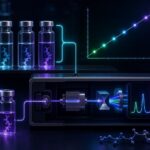
In laboratory testing, purity is commonly assessed using techniques such as high-performance liquid chromatography (HPLC).
HPLC separates detectable components according to their interactions with a chromatographic system.
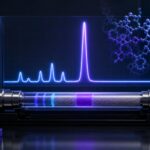
The resulting chromatogram may show a dominant peak associated with the intended peptide and smaller peaks associated with other detected components.
However, the meaning of a reported purity percentage depends on the method used.
For example, 99% HPLC area purity does not necessarily mean that 99% of the sample’s total mass is the intended peptide.
This is an important distinction when evaluating peptide quality.
What Is Peptide Potency?
Peptide potency describes the amount or concentration of a peptide preparation required to produce a specified biological effect in a defined assay.
In pharmacology, potency is often assessed using concentration–response experiments.
For example, researchers may investigate how different concentrations of a peptide affect a receptor-mediated response in a laboratory system.
The concentration required to produce a particular level of response can provide information about potency.
Potency is therefore related to biological function rather than simply chemical composition.
However, the word potency can also be used differently in certain pharmaceutical quality-control contexts, where it may refer to a validated measure of biological activity or strength relative to a reference standard.
The precise meaning should always be established from the method and reporting context.
Purity vs Potency: What Is the Main Difference?
The central distinction is straightforward:
Purity asks: What proportion of the measured sample is associated with the intended substance?
Potency asks: How much of the substance or preparation is needed to produce a specified effect in a defined biological assay?
These questions are related but not equivalent.
| Characteristic | Purity | Potency |
|---|---|---|
| Main focus | Chemical composition | Biological effect |
| Key question | What components are present? | How much is required for a defined response? |
| Common methods | HPLC, UPLC and other analytical techniques | Cell-based, receptor-based or functional assays |
| Typical result | Purity percentage or impurity profile | EC50, IC50 or relative biological potency, where appropriate |
| Main limitation | Does not establish biological activity | Does not establish chemical purity |
| Proves clinical safety? | No | No |
A complete understanding of peptide quality may require several different analytical measurements.
Can a Peptide Be Highly Pure but Have Low Potency?
Yes.
A sample may show high chromatographic purity while producing less biological activity than expected in a particular experimental system.
Several factors could contribute to this outcome.
Incorrect Molecular Structure
A peptide may have a molecular structure different from the intended active form.
Some structural variants can have similar chromatographic behaviour.
Changes in Molecular Conformation
For peptides whose function depends on particular structural arrangements, conformational differences may influence biological interactions.
Chemical Modifications
Certain modifications may affect receptor binding or other biological properties.
Assay Conditions
Potency measurements depend on the experimental system.
Changes in receptor expression, assay conditions or detection methods may influence the measured response.
Sample Content
If a preparation contains less of the intended peptide than assumed, concentration calculations based on total material mass may be inaccurate.
Importantly, low measured potency does not automatically prove that the peptide itself is intrinsically inactive.
The assay design and sample characterisation must also be considered.
Can a Peptide Have Biological Activity Without High Purity?
Yes.
A sample containing detectable impurities may still produce a measurable biological response.
However, the observed activity may not be attributable entirely to the intended peptide.
For example, an impurity could potentially:
- Contribute to the measured response
- Interfere with the assay
- Alter the apparent concentration–response relationship
- Affect the behaviour of the intended peptide
Whether this occurs depends on the impurity and the experimental system.
Therefore, observing biological activity does not prove that a sample is chemically pure.
What Is the Difference Between Purity, Potency and Peptide Content?
These three terms describe different properties.
Peptide Purity
Purity concerns the composition of the material under a defined analytical method.
For example, HPLC may estimate the relative contribution of the main detected chromatographic peak.
Peptide Content
Peptide content describes the amount of the intended peptide present in a sample, expressed using an appropriate quantitative measurement.
Depending on the method, it may be reported as a mass, concentration or mass fraction.
Peptide Potency
Potency describes the amount or concentration required to produce a specified biological effect under defined conditions.
A peptide preparation can have a high chromatographic purity result while containing water, counterions or other substances that affect the relationship between total material mass and peptide content.
Similarly, a peptide can have a well-characterised content but exhibit a different measured potency in a particular biological assay.
Why Doesn’t 99% HPLC Purity Mean 99% Potency?
This is one of the most common misunderstandings in peptide analysis.
A reported value of 99% HPLC area purity generally describes the relative detector response associated with the principal chromatographic peak under specified conditions.
It does not measure receptor activation, enzyme inhibition or another biological response.
HPLC is primarily an analytical separation technique.
A biological potency assay measures a defined functional effect.
These measurements cannot be substituted for one another.
A 99% HPLC purity result does not mean that a peptide has 99% biological potency.
In many assays, potency is not even expressed as a percentage.
Instead, it may be described by a concentration or a value relative to a characterised reference preparation.
How Do Laboratories Measure Peptide Purity?
Laboratories use analytical methods selected according to the peptide and the impurities being investigated.
High-Performance Liquid Chromatography (HPLC)
HPLC is widely used to separate and detect peptide-related components.
A chromatogram may reveal the intended peptide and additional detected substances.
However, co-elution, detector response differences and detection limits can affect interpretation.
Ultra-High-Performance Liquid Chromatography (UHPLC)
UHPLC uses chromatographic systems capable of operating at higher pressures and may offer improved separation performance or shorter analysis times for suitable methods.
Liquid Chromatography–Mass Spectrometry (LC-MS)
LC-MS combines chromatographic separation with mass-based analysis.
It can help investigate certain peptide impurities and degradation products.
Complementary Analytical Methods
Depending on the sample, additional techniques may be needed to assess water content, counterions, residual solvents or other components.
No single method necessarily provides a complete characterisation of every substance in a peptide preparation.
How Do Laboratories Measure Peptide Potency?
Potency is assessed using an appropriate biological or functional assay.
The assay should measure a response relevant to the scientific question.
1. Receptor Activation Assays
Some peptides interact with receptors on or within cells.
A receptor activation assay may measure a downstream response associated with receptor signalling.
Researchers can investigate how that response changes across a range of peptide concentrations.
2. Receptor Binding Assays
Binding assays investigate interactions between a peptide and a molecular target.
These can provide useful information about affinity or competition.
However, binding affinity is not the same as functional potency.
A peptide may bind to a receptor without activating it.
3. Enzyme Inhibition Assays
Certain peptides influence enzyme activity.
An enzyme inhibition assay may measure how the peptide affects the activity of a specified enzyme.
4. Cell-Based Functional Assays
Cell-based assays investigate responses in living cells.
These may include changes in signalling, gene expression or other defined cellular measurements.
5. Reference-Standard Comparisons
Some biological potency methods compare a test preparation with a characterised reference standard.
The result may be expressed as relative potency under the conditions of the validated assay.
The appropriate method depends on the peptides intended biological function and the purpose of the investigation.
What Is an EC50 Value?
EC50 stands for half-maximal effective concentration.
It is the concentration of a substance that produces 50% of the fitted maximal response in a particular concentration–response experiment.
EC50 values are often used to characterise the potency of agonists in functional assays.
A lower EC50 may indicate that a lower concentration is needed to produce the defined response in that system.
However, EC50 values depend on the assay conditions.
They should not be treated as universal properties independent of the experimental context.
What Is an IC50 Value?
IC50 stands for half-maximal inhibitory concentration.
It is the concentration associated with 50% inhibition of a specified measured response under defined experimental conditions.
IC50 values may be used in enzyme inhibition or other inhibitory assays.
Like EC50, IC50 is dependent on the assay design and conditions.
It is not automatically equivalent to binding affinity or clinical potency.
What Is the Difference Between Potency and Efficacy?
Potency and efficacy are different pharmacological concepts.
Potency concerns the concentration or amount needed to produce a specified response.
Efficacy concerns the magnitude of the effect that a substance can produce in a defined system.
For example, two peptide agonists may produce different maximal responses even if their EC50 values are similar.
Conversely, one peptide may require a lower concentration to produce a response but have a lower maximal effect.
This distinction is important when interpreting biological assay results.
Understanding a Concentration–Response Curve
Researchers often use concentration–response curves to investigate potency.
A simplified curve plots the measured biological response against the concentration of a test substance.
As concentration changes, the observed response may increase, decrease or follow another pattern depending on the assay.
For a conventional agonist response, the curve may approach a maximum.
The EC50 is estimated from the fitted response relationship.
However, not every assay produces a simple sigmoidal curve, and reliable interpretation requires appropriate experimental controls and data analysis.
Does a Lower EC50 Always Mean a Better Peptide?
No.
A lower EC50 may indicate greater apparent potency in a particular assay.
However, greater potency does not automatically mean that a peptide is better, safer or more clinically useful.
Other considerations include:
- Biological efficacy
- Target selectivity
- Off-target activity
- Stability
- Exposure and pharmacokinetics
- Toxicity
- Reproducibility
- Clinical evidence, where relevant
A laboratory potency measurement should not be interpreted as proof of therapeutic benefit.
What Is Biological Activity?
Biological activity refers to a measurable effect produced by a substance in a biological system.
For peptides, this may involve receptor interactions, enzyme modulation or other molecular processes.
Biological activity and potency are related but distinct.
Activity establishes that a measurable effect occurs under the assay conditions.
Potency characterises how the effect depends on the amount or concentration of the substance.
A statement that a peptide is biologically active does not, by itself, provide a complete potency measurement.
Why Is Peptide Identity Important When Measuring Potency?
Potency results are meaningful only when the material being tested is appropriately characterised.
For example, two peptides with similar molecular masses may have different amino acid sequences or structural arrangements.
These differences may influence biological activity.
Identity assessment may involve techniques such as:
- Mass spectrometry
- Tandem mass spectrometry
- Chromatographic comparison
- Other suitable structural methods
However, matching molecular mass alone does not always establish the exact sequence or structure.
Identity, purity and potency should therefore be treated as separate analytical questions.
How Can Peptide Impurities Affect Potency Testing?
Impurities may complicate biological measurements.
An impurity could potentially interact with the same target as the intended peptide.
Alternatively, it might interfere with an assay without directly affecting the biological target.
For example, a component could alter a detector signal or influence cell viability.
Such effects may change the apparent concentration–response relationship.
However, the presence of an impurity does not automatically mean that it will affect potency.
The significance depends on its identity, amount and the assay system.
How Does Peptide Degradation Affect Potency?
Peptide degradation can alter molecular structure.
Depending on the degradation pathway, this may affect the peptides interaction with a biological target.
For example, oxidation or cleavage could alter relevant molecular features.
However, not every chemical modification produces the same functional effect.
Some changes may reduce activity, while others may have little measurable effect in a particular assay.
Stability testing and biological assays can provide complementary information when these questions are relevant.
Can Two Peptide Batches Have the Same Purity but Different Potency?
Yes.
Two batches may show similar HPLC area purity results while differing in other characteristics.
For example, they may have different:
- Peptide contents
- Impurity identities
- Structural variants
- Degradation histories
- Formulation characteristics
These differences could influence measured biological responses.
A hypothetical comparison illustrates the distinction:
| Measurement | Batch A | Batch B |
|---|---|---|
| HPLC area purity | 99.0% | 99.0% |
| Intended peptide content | Requires separate measurement | Requires separate measurement |
| Impurity profile | May differ | May differ |
| Biological potency | Requires functional testing | Requires functional testing |
The same purity percentage does not establish equivalent potency.
What Is Relative Potency?
Relative potency compares the activity of a test preparation with that of a reference preparation using a defined assay.
For example, an appropriately validated assay may estimate whether a test material has more or less activity than a characterised reference under the specified conditions.
Relative potency may be expressed as a percentage or ratio.
However, this is not the same as chromatographic purity.
A result of 95% relative potency does not mean the sample is 95% chemically pure.
The two percentages refer to different measurements.
What Is the Difference Between Potency and Strength?
The term strength can have different meanings depending on the context.
In pharmaceutical products, strength commonly refers to the quantity or concentration of active substance in a defined unit or volume.
Potency instead relates to biological activity or the amount required to produce a specified effect.
For example, a preparation may contain a stated amount of a peptide, but that information alone does not establish its functional potency.
Likewise, biological potency does not necessarily establish the total quantity of peptide present.
Can Mass Spectrometry Measure Peptide Potency?
Conventional mass spectrometry does not directly measure biological potency.
Mass spectrometry is primarily used to investigate molecular properties, including mass-to-charge ratios.
It can help assess identity and investigate certain impurities or modifications.
However, it does not directly establish receptor activation or another biological effect.
Some specialised analytical approaches may use mass spectrometry to quantify molecular components involved in biological experiments.
Nevertheless, the biological potency conclusion depends on the assay design and measured functional relationship.
Can HPLC Measure Peptide Potency?
HPLC is not ordinarily a direct measure of biological potency.
It can provide information about chromatographic composition and, when appropriately calibrated, the amount of a specified compound.
However, a chromatographic peak does not demonstrate that the compound produces the expected biological response.
A separate functional assay may be needed.
What Does a Certificate of Analysis Tell You About Purity and Potency?
A Certificate of Analysis (COA) reports specified test results for an identified material or batch.
A COA may include:
- Peptide identity
- Batch or lot number
- HPLC purity
- Molecular mass information
- Peptide content
- Water content
- Relevant acceptance criteria
- Test dates
Some materials may also have biological potency testing where appropriate.
However, not every COA includes a potency assay.
A COA showing HPLC purity and mass spectrometry results should not be interpreted as proof that biological potency has been measured.
The tests actually performed determine what conclusions can be supported.
Why Is Batch Traceability Important for Potency Testing?
Batch traceability helps connect test results to the material analysed.
This matters because different batches may have different analytical characteristics.
For potency testing, traceability can help establish:
- Which batch was tested
- Which sample was used
- Which assay was performed
- Which reference standard was used
- When the test occurred
- Which results were obtained
Reliable documentation supports scientific reproducibility and investigation of unexpected findings.
However, a batch number alone does not establish purity or potency.
What Does High Purity Tell Researchers?
A high purity result can provide useful information about the composition of a sample under the conditions of a specified analytical method.
However, it does not independently establish:
- Correct molecular identity
- Exact peptide content
- Biological potency
- Functional efficacy
- Stability over time
- Sterility
- Clinical safety
- Regulatory approval
These characteristics require separate evidence where relevant.
Does High Potency Mean a Peptide Is Safe?
No.
High potency means that a particular response can be produced at a relatively low concentration or amount under defined conditions.
It does not establish that the response is beneficial or safe.
A potent substance may produce unwanted effects.
Safety depends on a much broader range of factors, including exposure, selectivity, toxicity and appropriate clinical evidence.
A potency result obtained in a laboratory assay should never be treated as proof of safety for human use.
Does Purity or Potency Prove a Peptide Is Pharmaceutical Grade?
Neither measurement alone establishes pharmaceutical-grade quality.
Pharmaceutical quality involves a broader framework that may include:
- Appropriate manufacturing controls
- Identity and content specifications
- Impurity limits
- Stability evidence
- Suitable analytical methods
- Microbiological controls where relevant
- Quality assurance
- Compliance with applicable regulatory requirements
A research peptide with high HPLC purity or measurable biological potency is not automatically pharmaceutical grade.
Common Misunderstandings About Purity and Potency
Misunderstanding 1: “99% Purity Means 99% Potency”
Incorrect. Purity and potency describe different characteristics.
Misunderstanding 2: “A Pure Peptide Must Be Biologically Active”
Incorrect. High chemical purity does not guarantee a particular biological response.
Misunderstanding 3: “A Potent Peptide Must Be Chemically Pure”
Incorrect. Biological activity does not establish the absence of impurities.
Misunderstanding 4: “HPLC Proves Biological Potency”
Incorrect. HPLC primarily measures chromatographic properties.
Misunderstanding 5: “Mass Spectrometry Confirms a Peptide Works”
Incorrect. Mass spectrometry provides molecular information, not direct evidence of biological efficacy.
Misunderstanding 6: “Lower EC50 Always Means Better”
Incorrect. Potency does not establish overall efficacy, selectivity or safety.
Misunderstanding 7: “A COA Always Includes Potency Testing”
Incorrect. A COA only reports the specified tests performed.
Frequently Asked Questions
What is the difference between peptide purity and potency?
Purity concerns chemical composition, while potency concerns the amount or concentration required to produce a specified biological effect in a defined assay.
Does 99% peptide purity mean 99% potency?
No. HPLC area purity and biological potency are different measurements.
How is peptide purity measured?
Peptide purity is commonly assessed using HPLC or other suitable analytical techniques.
How is peptide potency measured?
Potency may be assessed using receptor-based, cell-based, enzyme-based or other functional assays.
What does EC50 mean?
EC50 is the concentration associated with half of the maximal measured effect in a defined concentration–response experiment.
What does IC50 mean?
IC50 is the concentration associated with 50% inhibition of a specified response under defined conditions.
Is potency the same as efficacy?
No. Potency concerns the amount required for a response, while efficacy concerns the magnitude of the response.
Can a peptide be pure but inactive?
Yes. A chemically pure peptide may not produce the expected response in a particular biological assay.
Can a peptide be active but impure?
Yes. A sample containing impurities may still produce measurable biological activity.
Can HPLC measure biological potency?
Not directly in the usual sense. HPLC provides chromatographic information rather than a functional biological response.
Can mass spectrometry prove peptide potency?
No. Conventional mass spectrometry supports molecular characterisation but does not directly establish biological potency.
Does a COA show peptide potency?
Only if an appropriate potency test was performed and reported.
Does high potency mean a peptide is safe?
No. Potency does not establish clinical safety, effectiveness or regulatory approval.
Conclusion: Understanding Purity vs Potency
Peptide purity and potency are both important scientific concepts, but they answer different questions.
Purity concerns the composition of a material.
Potency concerns the amount or concentration required to produce a defined biological response.
Analytical methods such as HPLC and mass spectrometry can provide valuable information about peptide composition and molecular identity.
Biological assays are used to investigate functional activity and potency.
However, neither purity nor potency should be confused with peptide content, efficacy, stability or clinical safety.
A high HPLC purity result does not guarantee biological potency, and a measurable biological response does not prove chemical purity.
At Peptides UK, our Peptide Knowledge Hub is dedicated to explaining peptide science, analytical testing and laboratory quality through clear, accurate and research-focused educational content.
Explore our related guides to learn more about peptide purity, HPLC testing, mass spectrometry, peptide receptors and laboratory quality assessment.
Research and Safety Disclaimer
This article is intended for general scientific and educational purposes only and does not constitute medical advice.
Experimental research peptides must not be assumed safe or effective for human use. Materials designated strictly for laboratory research are not approved for human consumption or clinical use. This does not imply that all peptide-based medicines lack regulatory approval.
Purity results, potency measurements and laboratory documentation should not be interpreted as evidence of sterility, pharmaceutical-grade manufacturing, clinical safety or suitability for human administration.