Peptides UK | Peptide Knowledge Hub
The human body relies on a complex network of hormones to regulate blood glucose, appetite, digestion and energy metabolism.
Among the most important are glucagon-like peptide-1 (GLP-1), glucose-dependent insulinotropic polypeptide (GIP) and glucagon.
Although these hormones have different physiological functions, they share an important characteristic: each communicates with cells through a specialised receptor.
These receptors allow cells to recognise hormonal signals and respond through intracellular signalling pathways.
Understanding how they work is particularly relevant to modern peptide research, including the development of single-, dual- and triple-receptor agonists.
For example, semaglutide activates the GLP-1 receptor, tirzepatide activates both GIP and GLP-1 receptors, and the investigational compound retatrutide activates GLP-1, GIP and glucagon receptors.
But what distinguishes these receptor systems, and why does their interaction matter?
In this guide, Peptides UK explains the science behind GLP-1, GIP and glucagon receptors, their roles in metabolism, how they transmit signals and why researchers are studying their combined activation.
What Are GLP-1, GIP and Glucagon Receptors?
GLP-1, GIP and glucagon receptors are proteins that recognise particular peptide hormones and transmit signals into cells.
Each receptor has a distinct natural hormone:
- GLP-1 receptor (GLP-1R): Activated by glucagon-like peptide-1.
- GIP receptor (GIPR): Activated by glucose-dependent insulinotropic polypeptide.
- Glucagon receptor (GCGR): Activated by glucagon.
All three belong to the class B1 family of G protein-coupled receptors, or GPCRs.
These receptors are important because they help coordinate how the body responds to nutrients, maintains blood glucose and regulates energy balance.
Although they share structural similarities, their physiological effects are not identical.
GLP-1 vs GIP vs Glucagon: Key Differences
| Feature | GLP-1 | GIP | Glucagon |
|---|---|---|---|
| Full name | Glucagon-like peptide-1 | Glucose-dependent insulinotropic polypeptide | Glucagon |
| Main source | Intestinal L cells and selected neurons | Intestinal K cells | Pancreatic alpha cells |
| Receptor | GLP-1R | GIPR | GCGR |
| Hormone classification | Incretin | Incretin | Counter-regulatory metabolic hormone |
| Major physiological role | Supports glucose-dependent insulin secretion and appetite regulation | Supports nutrient-dependent insulin secretion | Helps maintain glucose availability |
| Important signalling pathway | cAMP | cAMP | cAMP |
| Research relevance | Diabetes and obesity | Diabetes and metabolic regulation | Glucose production and energy metabolism |
These descriptions represent major physiological functions rather than every effect of each hormone.
The receptors are expressed in different tissues, and their responses depend on the surrounding biological conditions.
What Is a Peptide Hormone?
A peptide hormone is a signalling molecule composed of amino acids connected by peptide bonds.
Peptide hormones are produced by specialised cells and released to communicate with other tissues.
Examples include:
- Insulin
- Glucagon
- GLP-1
- GIP
- Certain pituitary hormones
Many peptide hormones act through receptors located on cell membranes.
Because they generally do not pass freely through the lipid membrane, receptor binding allows them to influence processes inside the cell.
This is an example of cellular signal transduction.
What Is a G Protein-Coupled Receptor?
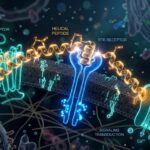
A G protein-coupled receptor is a membrane protein that transmits information from outside a cell to its interior.
GPCRs form one of the largest families of signalling proteins in the human body.
They are involved in responses to hormones, neurotransmitters and other signalling molecules.
The Seven-Transmembrane Structure
GPCRs contain seven membrane-spanning segments.
These segments help form the receptor’s characteristic structure.
When a suitable molecule binds, the receptor can change its conformation.
This change enables interactions with intracellular signalling proteins.
Why Are GPCRs Important in Medicine?
Many medicines work by activating or blocking GPCRs.
Their importance reflects the wide range of biological functions controlled by receptor signalling.
GLP-1R, GIPR and GCGR are examples of GPCRs that have become important targets in metabolic drug development.
How Do GLP-1, GIP and Glucagon Receptors Work?
Although the receptors recognise different hormones, they share certain signalling mechanisms.
One major pathway involves the intracellular messenger cyclic adenosine monophosphate, abbreviated as cAMP.
The process can be described in five stages.
Step 1: Hormone Recognition
A hormone binds to its corresponding receptor on the cell membrane.
Step 2: Receptor Activation
Binding changes the receptor’s conformation and promotes signalling activity.
Step 3: G Protein Activation
The receptor can activate an intracellular G protein, commonly involving the Gs pathway.
Step 4: cAMP Production
The activated pathway stimulates adenylyl cyclase, an enzyme that produces cAMP from ATP.
Step 5: Cellular Response
cAMP influences downstream signalling proteins, including protein kinase A and other effectors.
The resulting response depends on the cell type and receptor involved.
For example, cAMP signalling in a pancreatic beta cell can contribute to insulin secretion, while glucagon receptor signalling in a liver cell can promote glucose production.
The same general messenger system can therefore produce different physiological outcomes in different tissues.
1. What Is the GLP-1 Receptor?
The GLP-1 receptor (GLP-1R) is a cell-surface receptor activated by the hormone glucagon-like peptide-1.
GLP-1 is released in response to nutrient intake and contributes to the regulation of post-meal metabolism.
GLP-1 receptor signalling has been investigated extensively because of its effects on glucose regulation and appetite.
Where Are GLP-1 Receptors Found?
Functionally important GLP-1 receptor populations are found in several tissues, including:
- Pancreatic islets
- Selected brain regions
- Parts of the gastrointestinal and nervous systems
- Other tissues where expression and function have been investigated
However, the precise distribution of GLP-1 receptors is not equally established in every human tissue.
Some earlier studies used detection methods with limited specificity.
Researchers therefore distinguish between detecting receptor-related signals and demonstrating functional receptor expression.
How Does the GLP-1 Receptor Affect Insulin Secretion?
One of the best-established functions of GLP-1 receptor activation is enhancing glucose-dependent insulin secretion.
Insulin is a hormone produced by pancreatic beta cells.
It helps regulate blood glucose by influencing glucose uptake, storage and metabolism.
When glucose concentrations are elevated, GLP-1 receptor signalling can enhance insulin secretion.
This effect is glucose-dependent.
In other words, GLP-1 does not simply stimulate the same amount of insulin release regardless of blood glucose concentration.
However, this does not mean that every GLP-1-based treatment carries no risk of hypoglycaemia.
Clinical risk depends on the medicine and whether other glucose-lowering treatments are used.
How Does GLP-1 Affect Appetite?
GLP-1-related signalling contributes to appetite and food-intake regulation.
This involves communication between peripheral tissues and neural circuits involved in energy balance.
GLP-1 receptor activation can influence:
- Hunger
- Satiety
- Food intake
- Responses to nutrient consumption
These processes involve complex interactions between the brain, gastrointestinal system and other tissues.
Appetite regulation should not be reduced to a single receptor operating independently.
How Does GLP-1 Affect Gastric Emptying?
Gastric emptying is the movement of stomach contents into the small intestine.
GLP-1 receptor activation can slow gastric emptying.
This may influence the rate at which nutrients enter the intestine and affect post-meal glucose responses.
However, the size and duration of this effect depend on the particular compound and exposure pattern.
The gastric effects of short-acting and long-acting GLP-1 receptor agonists may differ.
2. What Is the GIP Receptor?
The GIP receptor (GIPR) is activated by glucose-dependent insulinotropic polypeptide.
GIP is released from intestinal K cells following nutrient intake.
It is one of the body’s principal incretin hormones.
What Does Incretin Mean?
An incretin is a gastrointestinal hormone that enhances insulin secretion in response to nutrient intake.
GLP-1 and GIP are the two major incretin hormones.
Their combined actions contribute to the body’s response to food.
Where Are GIP Receptors Found?
GIP receptors are expressed in several tissues.
Important areas of research include:
- Pancreatic beta cells
- Adipose tissue
- Selected regions of the nervous system
- Bone-related tissues
The physiological importance of GIP signalling differs across these locations.
How Does GIP Influence Insulin Secretion?
GIP receptor activation enhances insulin secretion in a glucose-dependent manner.
In pancreatic beta cells, GIPR signalling commonly involves cAMP.
This helps amplify insulin secretion when glucose is available.
Although GLP-1 and GIP share this function, they are not biologically identical.
Their responses may differ depending on metabolic conditions and receptor regulation.
For example, the insulinotropic effect of GIP can be impaired in people with type 2 diabetes.
This does not mean the receptor is completely inactive.
What Does GIP Do in Adipose Tissue?
Adipose tissue stores energy and participates in metabolic signalling.
Researchers have investigated GIP receptor activity in relation to:
- Lipid metabolism
- Nutrient handling
- Adipocyte biology
- Insulin sensitivity
- Energy balance
However, GIP’s role in body-weight regulation is complex.
Both GIP receptor agonism and antagonism have been investigated in experimental metabolic research.
This apparent paradox illustrates why receptor biology cannot always be described using a simple beneficial-versus-harmful model.
The effects depend on the wider physiological and pharmacological context.
Does GIP Affect Glucagon Secretion?
GIP can influence glucagon secretion under certain conditions.
Its effects depend partly on glucose concentrations.
For example, GIP may stimulate glucagon secretion during low or normal glucose conditions.
This differs from the glucose-dependent suppression of glucagon secretion commonly associated with GLP-1 signalling.
The two incretin hormones therefore have overlapping but distinct effects on pancreatic hormone regulation.
3. What Is the Glucagon Receptor?
The glucagon receptor (GCGR) is activated by the hormone glucagon.
Glucagon is produced primarily by pancreatic alpha cells.
It plays an important role in maintaining blood glucose availability, particularly when blood glucose is low or during fasting.
Where Are Glucagon Receptors Found?
The liver is a major site of glucagon receptor activity.
Glucagon receptor signalling is also investigated in other tissues, although the physiological significance of receptor expression varies.
What Does the Glucagon Receptor Do?
One of its most important functions is regulating hepatic glucose production.
When glucagon binds to receptors on liver cells, it activates signalling pathways that influence glucose metabolism.
How Does Glucagon Increase Blood Glucose?
Glucagon can promote glucose availability through two important processes.
Glycogenolysis
Glycogenolysis is the breakdown of glycogen.
Glycogen is a stored form of glucose found primarily in the liver and skeletal muscle.
Glucagon acts mainly on the liver to promote glycogen breakdown and glucose release.
Gluconeogenesis
Gluconeogenesis is the production of glucose from non-carbohydrate precursors.
These can include lactate, glycerol and certain amino acids.
Glucagon receptor signalling can support hepatic gluconeogenesis.
Together, these processes help maintain glucose availability during fasting and other metabolic conditions.
Does Glucagon Only Affect Blood Sugar?
No.
Although glucagon is widely known for its effects on blood glucose, it also participates in broader metabolic regulation.
Researchers have investigated glucagon signalling in relation to:
- Amino acid metabolism
- Hepatic lipid metabolism
- Energy expenditure
- Nutrient utilisation
- Appetite-related processes
The importance of these effects varies by species, tissue and experimental conditions.
Glucagon receptor activation can also increase blood glucose, which is an important consideration in the development of multi-receptor medicines.
GLP-1 vs GIP vs Glucagon: How Do Their Effects Compare?
| Biological process | GLP-1 receptor | GIP receptor | Glucagon receptor |
|---|---|---|---|
| Glucose-dependent insulin secretion | Enhances | Enhances | Not its principal physiological function |
| Appetite regulation | Important established role | Under investigation and context-dependent | Context-dependent effects |
| Gastric emptying | Can slow | Less prominent direct role | Not a principal established function |
| Hepatic glucose production | Can reduce indirectly through metabolic effects | Indirect and context-dependent | Promotes |
| Adipose tissue signalling | Indirect and other effects | Important research area | Indirect metabolic effects |
| Energy expenditure | Influences energy balance | Under investigation | Investigated for potential contribution |
| Primary metabolic context | Nutrient response and glucose regulation | Nutrient response and insulin signalling | Fasting and glucose availability |
These are broad physiological distinctions.
They do not imply that each receptor operates in isolation.
How Do GLP-1, GIP and Glucagon Work Together?
Metabolic regulation requires coordination between hormones with different effects.
Following a meal, incretin hormones help coordinate nutrient handling.
During fasting, glucagon signalling contributes to maintaining glucose availability.
Insulin, glucagon, GLP-1 and GIP interact within a larger regulatory system.
Their activity is influenced by:
- Blood glucose
- Nutrient availability
- Nervous system signalling
- Tissue sensitivity
- Hormone secretion
- Receptor expression
This coordinated regulation allows the body to respond to changing metabolic conditions.
What Is the Incretin Effect?
The incretin effect describes the greater insulin response typically observed when glucose is consumed orally compared with an equivalent intravenous glucose exposure under matched blood glucose conditions.
This difference reflects the contribution of gastrointestinal signalling.
GLP-1 and GIP are major mediators of the incretin effect.
Their release following nutrient intake helps enhance insulin secretion.
This is an important example of communication between the digestive system and pancreas.
What Is a Receptor Agonist?
An agonist is a molecule that binds to a receptor and activates it.
Natural peptide hormones are agonists of their corresponding receptors.
Researchers can also develop synthetic molecules designed to activate these receptors.
Examples include medicines and investigational compounds that target metabolic hormone pathways.
An agonist’s effects depend on several factors, including:
- Receptor affinity
- Functional potency
- Intrinsic efficacy
- Signalling characteristics
- Tissue exposure
- Duration of activity
An agonist is not necessarily identical to the body’s natural hormone.
What Is a Receptor Antagonist?
An antagonist binds to a receptor and blocks or reduces activation by an agonist.
Antagonists are important research tools because they can help scientists investigate receptor function.
For example, a receptor antagonist may help determine whether an observed cellular response depends on a particular receptor.
However, receptor blockade may produce different outcomes in different tissues.
What Is Single Receptor Agonism?
Single receptor agonism involves activating one principal receptor target.
For example, semaglutide is a GLP-1 receptor agonist.
Its therapeutic effects are associated with GLP-1 receptor activation.
However, a medicine acting through one receptor can still influence multiple physiological processes.
Single-receptor activity does not mean a compound produces only one biological effect.
What Is Dual Receptor Agonism?
Dual receptor agonism involves activating two receptor types.
Tirzepatide is an example of a dual GIP/GLP-1 receptor agonist.
It is a single molecular entity with activity at both receptors.
This differs from combining two separate medicines.
Dual agonism allows researchers to investigate how simultaneous activation of related pathways influences metabolic outcomes.
However, clinical effectiveness and safety must be established through appropriate studies.
What Is Triple Receptor Agonism?
Triple receptor agonism involves activating three receptor types.
Retatrutide is an investigational example designed to activate:
- GLP-1R
- GIPR
- GCGR
Its mechanism combines incretin receptor activity with glucagon receptor agonism.
Researchers are investigating whether this combination influences appetite, glucose regulation and energy metabolism in ways that differ from single- and dual-receptor approaches.
However, the number of receptors activated does not provide a simple measure of clinical effectiveness.
Single vs Dual vs Triple Receptor Agonists
| Compound | GLP-1R | GIPR | GCGR | Classification |
|---|---|---|---|---|
| Semaglutide | Yes | No | No | Single receptor agonist |
| Tirzepatide | Yes | Yes | No | Dual receptor agonist |
| Retatrutide | Yes | Yes | Yes | Triple receptor agonist |
This table describes receptor targeting.
It is not a ranking of medicines by safety or effectiveness.
Clinical comparisons require appropriately designed studies rather than assumptions based on the number of receptor targets.
Why Is Glucagon Included in Triple Agonist Research?
Glucagon receptor activation is scientifically interesting because of its effects on hepatic metabolism and energy regulation.
Researchers have investigated whether glucagon receptor agonism, when combined with incretin signalling, can influence:
- Energy expenditure
- Nutrient utilisation
- Body-weight regulation
- Metabolic responses
However, glucagon also stimulates hepatic glucose production.
A multi-receptor compound must therefore be evaluated as a complete pharmacological system.
The interaction between receptor pathways matters more than simply counting how many receptors are activated.
What Is Receptor Affinity?
Receptor affinity describes how strongly a molecule binds to a receptor under defined conditions.
Affinity can be investigated using binding assays.
A molecule with high affinity may bind at relatively low concentrations.
However, strong binding does not necessarily mean strong receptor activation.
Binding affinity and functional potency are separate concepts.
What Is Receptor Potency?
Receptor potency describes the concentration required to produce a specified functional response in an assay.
One commonly used measurement is EC50.
EC50 represents the concentration producing 50% of a defined maximal response under the assay conditions.
However, EC50 values depend on the experimental system.
Factors such as receptor density, signal amplification and assay design can influence the result.
Consequently, receptor potency measured in vitro does not directly predict clinical effectiveness.
What Is Receptor Efficacy?
In pharmacology, efficacy describes the capacity of an agonist to produce a response after receptor activation.
This differs from clinical efficacy.
A compound may produce a strong response in a laboratory assay without having demonstrated clinical benefits in humans.
Researchers therefore distinguish between:
- Binding affinity
- Functional potency
- Intrinsic efficacy
- Clinical effectiveness
These measurements answer different scientific questions.
What Is Biased Agonism?
Biased agonism occurs when different ligands acting at the same receptor preferentially influence particular signalling pathways.
GPCRs can interact with more than one intracellular signalling mechanism.
For example, researchers may examine:
- G protein signalling
- cAMP production
- Beta-arrestin recruitment
- Receptor internalisation
Different agonists may produce different signalling profiles.
This is an important area of modern receptor pharmacology.
However, laboratory evidence of signalling bias does not automatically establish a clinical advantage.
What Is Receptor Desensitisation?
Receptor desensitisation refers to a reduction in signalling responsiveness following stimulation.
This can occur through several mechanisms.
These may include receptor phosphorylation, regulatory protein recruitment and changes in receptor localisation.
What Is Receptor Internalisation?
Receptor internalisation involves movement of receptors from the cell surface into intracellular compartments.
Some internalised receptors may be recycled back to the membrane.
Others may undergo degradation.
These processes can influence the duration and pattern of receptor signalling.
They are important considerations in the development of long-acting peptide agonists.
Why Are Natural GLP-1 and GIP Rapidly Broken Down?
Natural GLP-1 and GIP are subject to enzymatic degradation.
An important enzyme involved is dipeptidyl peptidase-4 (DPP-4).
DPP-4 cleaves certain peptide hormones, reducing their biological activity.
This contributes to the relatively short circulating lifetimes of endogenous incretins.
Synthetic receptor agonists may incorporate molecular modifications that alter their susceptibility to degradation or extend their duration of action.
However, different medicines achieve longer activity through different molecular designs.
How Do Scientists Study These Receptors?
Researchers use several experimental techniques.
Receptor Binding Assays
Binding assays investigate interactions between molecules and receptor proteins.
They can help estimate affinity under defined conditions.
cAMP Assays
These assays measure changes in intracellular cAMP following receptor activation.
They are widely used to investigate GLP-1R, GIPR and GCGR activity.
Beta-Arrestin Assays
These investigate the recruitment of beta-arrestin proteins following receptor activation.
Cell-Based Functional Assays
Researchers may use cells expressing specific receptors to investigate signalling responses.
Structural Biology
Techniques such as cryo-electron microscopy can provide detailed information about receptor structure and ligand interactions.
Clinical Studies
Human studies are required to investigate therapeutic outcomes, tolerability and safety.
Each approach answers different questions.
A binding assay cannot replace a clinical trial.
What Have Structural Studies Revealed?
Structural research has helped scientists understand how peptide hormones interact with class B1 GPCRs.
These receptors contain extracellular regions that contribute to ligand recognition and transmembrane regions involved in receptor activation.
High-resolution structural studies have provided insights into how peptide ligands engage receptor binding pockets.
Such findings support the development of synthetic agonists with different receptor activity profiles.
However, structural information alone cannot establish clinical safety or effectiveness.
Why Does Receptor Selectivity Matter?
Receptor selectivity describes the extent to which a compound interacts with one receptor relative to others.
A highly selective agonist may primarily activate one receptor type.
A multi-receptor agonist is designed to activate more than one.
Selectivity is important because receptor activation in different tissues may produce different effects.
Researchers therefore investigate both intended and unintended interactions.
A compound’s biological profile depends on its overall pharmacology, not simply its most prominent target.
Why Are These Receptors Important in Biotechnology?
GLP-1R, GIPR and GCGR are important examples of how peptide science can contribute to modern biotechnology.
Research involving these receptors brings together several scientific disciplines:
- Peptide chemistry
- Molecular biology
- Structural biology
- Pharmacology
- Endocrinology
- Analytical chemistry
- Clinical research
Scientists can use molecular design to investigate how changes in peptide structure affect receptor activity.
This helps explain why peptide-based compounds have become important tools in metabolic research.
Does Triple Receptor Agonism Mean Three Times the Effect?
No.
Activating three receptors does not mean a compound produces three times the effect of a single-receptor agonist.
The relationship between receptor activation and biological response is not linear.
Different pathways may interact, amplify one another or produce opposing effects.
For example, GLP-1 and GIP receptor signalling can support glucose-dependent insulin secretion, while glucagon receptor signalling can promote hepatic glucose production.
The combined outcome depends on the compound’s receptor activity profile and the physiological context.
Do All Three Receptors Control Appetite?
Not in the same way.
GLP-1 receptor signalling has an established role in appetite regulation.
GIP receptor signalling is being investigated for its contribution to energy balance and the effects of multi-receptor medicines.
Glucagon signalling may also influence food intake and energy metabolism, but its effects depend on the experimental and physiological context.
It would therefore be inaccurate to describe all three receptors as identical appetite-control switches.
Do These Receptors Control Metabolism Independently?
No.
The receptors participate in an interconnected hormonal network.
Their effects depend on factors such as:
- Blood glucose concentration
- Nutrient intake
- Hormonal state
- Tissue receptor expression
- Cellular signalling capacity
- Duration of exposure
The same receptor may also produce different responses in different tissues.
This complexity is one reason why experimental findings cannot always be translated directly into clinical outcomes.
Are GLP-1, GIP and Glucagon Receptors Safe to Activate?
These receptors perform essential physiological functions.
However, normal receptor function does not establish that every synthetic agonist is safe.
Safety depends on the specific compound, exposure, clinical population and other factors.
Approved medicines have undergone regulatory assessment for particular uses.
Investigational compounds require further evaluation.
For example, GLP-1-based medicines can cause gastrointestinal adverse effects, while glucagon receptor activation can influence blood glucose.
The safety profile of one medicine cannot automatically be applied to another compound targeting similar receptors.
Why Does Peptide Purity Matter in Receptor Research?
Reliable receptor experiments require appropriately characterised materials.
Researchers may use analytical techniques to investigate:
- Peptide identity
- Molecular mass
- Chromatographic purity
- Peptide content
- Degradation products
- Stability
HPLC and mass spectrometry can help assess particular characteristics.
However, a high chromatographic purity result does not establish receptor potency, biological efficacy or human safety.
These are separate scientific questions.
Can a Certificate of Analysis Confirm Receptor Activity?
A Certificate of Analysis may report results from chemical or biological testing.
However, a COA does not automatically demonstrate receptor agonism.
For example, HPLC and mass spectrometry may support peptide identity and purity.
Functional receptor activity generally requires suitable biological assays.
A COA also does not independently establish sterility, clinical effectiveness or regulatory approval.
Common Misunderstandings About GLP-1, GIP and Glucagon
“GLP-1, GIP and Glucagon Are the Same Hormone”
Incorrect. They are distinct peptide hormones with different physiological functions.
“All Three Receptors Produce the Same Effects”
Incorrect. Their effects differ by receptor, tissue and biological context.
“GIP and GLP-1 Are Identical Because Both Are Incretins”
Incorrect. They share certain functions but have different receptor systems and physiological effects.
“Glucagon Is Only Relevant to Blood Glucose”
Incorrect. Glucagon also participates in broader metabolic regulation.
“Triple Agonists Are Automatically Better Than Single Agonists”
Incorrect. Comparative effectiveness and safety require clinical evidence.
“Receptor Binding Proves Clinical Effectiveness”
Incorrect. Binding is one part of pharmacology, not proof of therapeutic benefit.
“High Peptide Purity Guarantees Receptor Potency”
Incorrect. Purity and biological potency are different measurements.
Frequently Asked Questions
What are GLP-1, GIP and glucagon receptors?
They are cell-surface proteins that recognise specific peptide hormones and transmit metabolic signals into cells.
What does GLP-1 stand for?
Glucagon-like peptide-1.
What does GIP stand for?
Glucose-dependent insulinotropic polypeptide.
What does GCGR stand for?
Glucagon receptor.
Are GLP-1 and GIP the same?
No. They are different incretin hormones with distinct receptors.
What is the main function of the GLP-1 receptor?
It contributes to glucose-dependent insulin secretion, appetite regulation and other metabolic processes.
What is the main function of the GIP receptor?
It helps coordinate nutrient-dependent insulin secretion and participates in other metabolic processes.
What is the main function of the glucagon receptor?
It helps regulate hepatic glucose production and maintain glucose availability.
Are these receptors GPCRs?
Yes. All three belong to the class B1 family of G protein-coupled receptors.
What is cAMP?
Cyclic adenosine monophosphate is an intracellular messenger involved in many receptor signalling pathways.
What is the incretin effect?
It is the enhanced insulin response to oral glucose compared with matched intravenous glucose exposure.
What is a GLP-1 receptor agonist?
A molecule that binds to and activates the GLP-1 receptor.
What is a dual receptor agonist?
A molecule designed to activate two receptor types, such as tirzepatide.
What is a triple receptor agonist?
A molecule designed to activate three receptor types, such as investigational retatrutide.
Does triple receptor agonism mean three times the potency?
No. Receptor number does not determine potency through a simple mathematical relationship.
Does 99% purity prove a peptide is biologically active?
No. Chemical purity does not establish functional receptor activity.
Conclusion: Understanding Three Important Metabolic Receptors
GLP-1, GIP and glucagon receptors are central components of the body’s metabolic signalling network.
Although all three belong to the class B1 GPCR family, they respond to different hormones and contribute to distinct physiological processes.
GLP-1 receptor signalling is important for glucose-dependent insulin secretion, appetite regulation and gastric function.
GIP receptor signalling contributes to nutrient-dependent insulin responses and other metabolic processes.
Glucagon receptor signalling plays a major role in hepatic glucose production and broader energy metabolism.
Together, these systems help the body respond to changing nutritional and metabolic conditions.
Their biology has also become increasingly important in peptide drug development.
Single-, dual- and triple-receptor agonists illustrate how scientists can investigate different combinations of receptor activity.
However, receptor activation, laboratory potency and clinical effectiveness are not interchangeable concepts.
At Peptides UK, our Peptide Knowledge Hub explores peptide structure, receptor biology and molecular research through accessible, evidence-focused educational content.
Understanding these three receptor systems provides a valuable foundation for interpreting modern metabolic peptide research.
Scientific References and Further Reading
1. Holst JJ, et al. (2024). Class B1 GPCRs: Insights into multireceptor pharmacology for the treatment of metabolic disease.
https://pubmed.ncbi.nlm.nih.gov/38984948/
2. Seino Y, Fukushima M, Yabe D. (2010). GIP and GLP-1, the two incretin hormones: Similarities and differences.
https://pubmed.ncbi.nlm.nih.gov/24843404/
3. Mayendraraj A, Rosenkilde MM, Gasbjerg LS. (2022). GLP-1 and GIP receptor signaling in beta cells: A review of receptor interactions and co-stimulation. Peptides.
https://pubmed.ncbi.nlm.nih.gov/35065096/
4. GIPR/GLP-1R Dual Agonist Therapies for Diabetes and Weight Loss: Chemistry, Physiology, and Clinical Applications (2023).
https://pubmed.ncbi.nlm.nih.gov/37591245/
5. Jastreboff AM, et al. (2023). Triple–Hormone-Receptor Agonist Retatrutide for Obesity — A Phase 2 Trial. New England Journal of Medicine.
https://doi.org/10.1056/NEJMoa2301972
6. National Center for Biotechnology Information. Physiology, Enteroglucagon.
https://www.ncbi.nlm.nih.gov/books/NBK553105/
7. National Center for Biotechnology Information. Physiology, Gastric Inhibitory Peptide.
https://www.ncbi.nlm.nih.gov/books/NBK546653/
Research and Safety Disclaimer
This article is intended for general scientific and educational purposes only and does not constitute medical advice.
Information about GLP-1, GIP and glucagon receptor signalling does not establish that any particular experimental peptide is safe or effective for human use.
Some medicines targeting these receptors have regulatory authorisation for specific indications, while other compounds remain investigational.
Readers should not interpret receptor activity, analytical purity, research-use labels or laboratory documentation as evidence of pharmaceutical-grade manufacture, sterility, clinical safety or regulatory approval.
This article does not recommend obtaining, administering or self-experimenting with unapproved peptide preparations.
For advice about diabetes, obesity or metabolic health, consult an appropriately qualified healthcare professional.