Peptides UK | Peptide Knowledge Hub
Peptides are widely used in molecular biology, biotechnology, analytical research and pharmaceutical development.
Their structures are defined by amino acid sequences, peptide bonds and, in some cases, additional chemical modifications.
However, peptide molecules do not necessarily remain unchanged over time.
Depending on their structure and environment, peptides can undergo chemical reactions or physical changes that alter their properties.
This process is known as peptide degradation.
Degradation may involve the cleavage of peptide bonds, oxidation of susceptible amino acid residues, deamidation, isomerisation or changes in molecular organisation.
Some degradation processes produce new chemical species. Others involve physical changes, such as aggregation or precipitation, without necessarily changing the peptides covalent structure.
Understanding these processes is essential for interpreting peptide stability studies, identifying impurities and assessing laboratory material quality.
Importantly, degradation is not always visible.
A peptide preparation may appear unchanged while its chemical composition has altered. Conversely, a visible change in a sample does not necessarily identify which degradation process has occurred.
In this guide, Peptides UK explains what peptide degradation is, why peptides degrade, the main degradation pathways and how laboratories investigate peptide stability and breakdown.
What Is Peptide Degradation?
Peptide degradation refers to chemical or physical changes that alter a peptides original molecular structure, composition or state.
In the strict chemical sense, degradation involves reactions that change the molecule itself.
Examples include:
- Hydrolysis of peptide bonds
- Oxidation of amino acid side chains
- Deamidation
- Isomerisation
- Certain disulphide bond reactions
In a broader pharmaceutical stability context, researchers also investigate physical instability, including aggregation, adsorption and precipitation.
These processes may affect the amount of intact, soluble or functionally available peptide even when some molecules retain their original covalent structure.
Why Is Peptide Degradation Important?
Degradation can influence:
- Molecular identity
- Chemical purity
- Peptide content
- Biological activity
- Solubility
- Aggregation behaviour
- Analytical results
- Material stability
- Reproducibility between experiments
The significance of a particular degradation pathway depends on the peptide, its intended application and the conditions being investigated.
Why Do Peptides Degrade?
Peptides contain chemical groups that may react under certain environmental or biological conditions.
Their susceptibility depends on factors such as:
- Amino acid sequence
- Terminal modifications
- Three-dimensional conformation
- pH
- Temperature
- Water availability
- Oxygen exposure
- Light
- Trace metals
- Enzymatic activity
- Formulation components
Not every peptide is equally susceptible to every pathway.
For example, a peptide without methionine cannot undergo methionine oxidation, although other residues may still be susceptible to oxidation.
Likewise, a peptide without asparagine cannot undergo asparagine deamidation, but other chemical changes may remain possible.
Peptide degradation is sequence-dependent and condition-dependent.
What Is the Difference Between Chemical and Physical Peptide Degradation?
Chemical degradation changes a molecule’s covalent structure.
Physical instability changes how molecules are organised, distributed or associated without necessarily altering their covalent bonds.
| Feature | Chemical degradation | Physical instability |
|---|---|---|
| Main change | Chemical structure | Physical state or molecular association |
| Examples | Hydrolysis, oxidation, deamidation | Aggregation, precipitation, adsorption |
| New covalent species | Often formed | Not necessarily |
| Potential effect | Altered molecular identity or function | Reduced soluble peptide or changed behaviour |
| Common investigations | LC-MS, HPLC, peptide mapping | SEC, DLS, turbidity, solubility testing |
The distinction is useful, but the processes can overlap.
For example, oxidation may promote aggregation, while aggregation may influence susceptibility to further chemical reactions.
1. Peptide Hydrolysis
Hydrolysis is a chemical reaction in which water participates in breaking a chemical bond.
In peptide research, hydrolysis commonly refers to cleavage of peptide bonds.
A peptide bond connects amino acid residues through an amide linkage.
If that bond is broken, the original peptide can be divided into smaller fragments.
What Happens During Peptide Bond Hydrolysis?
Consider a hypothetical peptide containing five amino acid residues.
If a peptide bond is hydrolysed, the original five-residue chain may be separated into two shorter fragments.
These fragments have different molecular masses and may have different biological properties.
What Causes Peptide Hydrolysis?
Hydrolysis may be promoted by:
- Acidic or alkaline conditions
- Elevated temperatures
- Particular sequence-dependent chemical environments
- Enzymatic activity
However, peptide bonds are generally relatively resistant to spontaneous hydrolysis under many ordinary conditions.
The rate of hydrolysis varies substantially with the system.
Can Hydrolysis Occur in Dry Peptides?
Water availability can influence hydrolytic processes.
However, a freeze-dried material is not necessarily completely free of water.
Residual moisture and other factors may still contribute to chemical instability.
Drying may reduce some degradation pathways, but it does not guarantee indefinite stability.
2. Peptide Oxidation
Oxidation involves chemical changes associated with electron transfer or an increase in the oxidation state of part of a molecule.
Certain amino acid residues are particularly susceptible to oxidative reactions.
These include:
- Methionine
- Cysteine
- Tryptophan
- Tyrosine
- Histidine, under some conditions
The specific products depend on the residue and reaction conditions.
Methionine Oxidation
Methionine contains a sulphur-containing side chain.
One recognised oxidation product is methionine sulphoxide.
Formation of this product adds one oxygen atom to the molecular structure.
This produces a monoisotopic mass increase of approximately:
+15.9949 Da
Mass spectrometry can help detect a change consistent with oxygen addition.
However, a mass increase alone does not always establish which residue was oxidised.
What Can Promote Peptide Oxidation?
Relevant factors may include:
- Oxygen
- Reactive oxygen species
- Light
- Trace metal contaminants
- Certain formulation components
- Other environmental conditions
The relationship between oxygen exposure and oxidation is not identical for every peptide.
3. Peptide Deamidation
Deamidation is a chemical reaction that converts certain amide-containing groups into related acidic structures.
In peptide research, deamidation commonly involves asparagine residues.
Glutamine residues can also undergo deamidation, although their behaviour differs.
What Happens During Asparagine Deamidation?
Asparagine may undergo reactions that produce aspartic acid-related and isoaspartic acid-related products.
These products can differ in structure and properties from the original peptide.
For the conversion of an amide side chain to a corresponding carboxylic acid, the monoisotopic mass change is approximately:
+0.9840 Da
Why Is Deamidation Important?
Deamidation can influence:
- Molecular charge
- Local structure
- Chromatographic behaviour
- Biological interactions
- Chemical stability
The effect depends on the position of the modified residue and the peptides overall structure.
What Influences Deamidation?
Factors may include:
- Amino acid sequence
- pH
- Temperature
- Molecular conformation
- Local chemical environment
Some asparagine-containing sequences are more susceptible than others.
4. Peptide Isomerisation
Isomerisation occurs when a molecule changes into another structure with the same molecular formula.
In peptide research, isomerisation can involve changes in the arrangement or connectivity of particular chemical groups.
One important example is the formation of isoaspartic acid-related structures.
Why Is Isomerisation Difficult to Detect?
Isomers may have identical molecular masses.
Therefore, a simple intact-mass measurement may not distinguish them.
Researchers may need:
- Suitable chromatographic separation
- Tandem mass spectrometry
- Specialised peptide mapping
- Other structural analytical techniques
Does Isomerisation Always Reduce Biological Activity?
No.
An isomerised peptide may show reduced, altered or occasionally similar activity, depending on its structure and target.
The outcome cannot be inferred from the presence of isomerisation alone.
5. Disulphide Bond Changes
Some peptides contain cysteine residues capable of forming disulphide bonds.
A disulphide bond links two sulphur atoms.
These bonds can help stabilise particular peptide conformations.
However, disulphide-related chemistry can also contribute to instability.
What Is Disulphide Scrambling?
Disulphide scrambling occurs when existing disulphide connections rearrange.
A peptide containing several cysteine residues may form alternative disulphide pairings.
This can change its three-dimensional structure.
Why Does Disulphide Scrambling Matter?
Different disulphide arrangements may influence:
- Molecular conformation
- Receptor interactions
- Biological activity
- Chromatographic behaviour
- Stability
Some incorrectly paired structures may have the same molecular mass as the intended peptide.
Consequently, mass measurement alone may not establish the correct disulphide connectivity.
6. Peptide Aggregation
Aggregation occurs when peptide molecules associate with one another to form larger assemblies.
Aggregation is generally considered a physical instability process, although chemical changes may contribute to it.
Aggregates may be reversible or irreversible.
Their properties depend on the peptide and surrounding conditions.
Why Do Peptides Aggregate?
Aggregation can be influenced by:
- Amino acid sequence
- Hydrophobic interactions
- Electrostatic interactions
- Concentration
- Temperature
- pH
- Solvent conditions
- Interfaces and mechanical stress
Why Is Aggregation Important?
Aggregation may change the amount of soluble peptide available in a sample.
It can also interfere with analytical measurements.
In pharmaceutical development, aggregation may raise additional quality and safety concerns that require product-specific assessment.
However, not every aggregate has the same properties or consequences.
7. Peptide Precipitation
Precipitation occurs when material separates from solution into a less-soluble phase.
A peptide may precipitate when its solubility is exceeded or environmental conditions change.
Is Precipitation the Same as Chemical Degradation?
No.
A precipitated peptide may retain its original covalent structure.
However, precipitation can reduce the amount of peptide present in the soluble fraction.
This may produce an apparent loss of concentration.
Can Precipitation Be Reversed?
Sometimes.
Reversibility depends on the peptide and the conditions.
Researchers should not assume that redissolving a precipitate restores the original material quality or biological behaviour.
8. Peptide Adsorption
Adsorption occurs when peptide molecules associate with a surface.
In laboratories, relevant surfaces may include:
- Sample containers
- Tubing
- Filters
- Chromatographic components
- Other laboratory materials
Adsorption can reduce the measurable peptide concentration in solution.
Does Adsorption Change Molecular Weight?
Not necessarily.
Adsorption may leave the peptides covalent structure unchanged.
However, it can influence sample recovery and quantitative results.
This is particularly important when researchers are measuring low peptide concentrations.
9. Enzymatic Peptide Degradation
In biological environments, enzymes can break down peptides.
Proteases and peptidases catalyse the cleavage of peptide bonds.
Why Is Enzymatic Degradation Important?
A peptide may remain stable under a laboratory storage condition but be rapidly degraded in a biological system.
For example, its stability in a buffered analytical solution may differ substantially from its stability in plasma or another biological matrix.
What Is Peptide Half-Life?
Half-life describes the time required for a measured quantity to decrease by half under specified conditions.
In biological research, the term may refer to different quantities, including the concentration of a peptide in plasma.
However, plasma elimination half-life reflects several processes, not solely enzymatic degradation.
These may include distribution and excretion.
Therefore, biological half-life and chemical degradation half-life are not necessarily the same thing.
What Environmental Factors Influence Peptide Degradation?
Several conditions can affect peptide stability.
| Factor | Possible influence |
|---|---|
| Temperature | May change reaction rates and physical stability |
| pH | Can influence hydrolysis, deamidation and molecular charge |
| Moisture | May support hydrolytic reactions |
| Oxygen | May contribute to oxidative pathways |
| Light | May initiate or accelerate photochemical reactions |
| Trace metals | May catalyse certain oxidation reactions |
| Concentration | May influence aggregation and adsorption behaviour |
| Formulation | Can alter solubility and chemical environment |
| Container material | May influence adsorption or compatibility |
These are general considerations.
The dominant degradation pathway must be established experimentally for the particular peptide.
How Does Temperature Affect Peptide Degradation?
Temperature can influence chemical reaction rates and physical behaviour.
For many chemical reactions, higher temperatures increase reaction rates.
However, peptide stability is not governed by one universal temperature relationship.
Some physical processes may behave differently.
What Is the Arrhenius Equation?
The Arrhenius equation describes how the rate constant of certain chemical reactions varies with temperature.
It is commonly written as:
k = A × e^(−Ea/RT)
Where:
- k is the reaction rate constant.
- A is a pre-exponential factor.
- Ea is activation energy.
- R is the gas constant.
- T is absolute temperature.
Researchers may use temperature-dependent kinetic data to investigate degradation.
However, extrapolation is only reliable when the underlying kinetic assumptions remain appropriate.
Does Refrigeration Stop Degradation?
No.
Lower temperatures may slow certain reactions, but they do not guarantee that all degradation processes stop.
The appropriate conditions depend on the peptide, formulation and validated stability data.
How Does pH Affect Peptide Stability?
pH influences the chemical environment of a peptide.
It can affect:
- Ionisation of functional groups
- Chemical reaction rates
- Solubility
- Molecular interactions
- Aggregation behaviour
Some degradation pathways may be promoted under acidic conditions, while others may be more pronounced under alkaline conditions.
Is Neutral pH Always Best?
No.
The most stable pH depends on the peptide and its formulation.
A peptide may show its greatest chemical stability outside neutral pH, while solubility or other factors may impose additional constraints.
Researchers therefore investigate pH experimentally rather than assuming one universal optimum.
How Does Light Affect Peptide Degradation?
Light can promote photochemical reactions in susceptible molecules.
Certain amino acid residues and associated substances may participate in light-induced chemistry.
Potential consequences include oxidation or other structural changes.
Are All Peptides Light-Sensitive?
No.
Light sensitivity depends on molecular structure and experimental conditions.
A stability assessment may include photostability testing when relevant.
ICH Q1B provides an established framework for photostability testing in pharmaceutical development.
How Does Moisture Affect Lyophilised Peptides?
Lyophilisation, or freeze-drying, removes water through a controlled process involving freezing and sublimation.
It is widely used to produce dried pharmaceutical and research materials.
However, lyophilised preparations can retain residual moisture.
Does Freeze-Drying Prevent Degradation?
Not completely.
Freeze-drying can improve stability for some formulations, but the result depends on:
- Residual moisture
- Molecular structure
- Excipients
- Packaging
- Storage conditions
- Physical state of the dried material
Some degradation pathways may continue in the dried state.
Therefore, lyophilisation is a formulation strategy rather than a guarantee of indefinite stability.
Does Freeze–Thaw Cycling Cause Peptide Degradation?
Repeated freezing and thawing can affect some peptide preparations.
Possible mechanisms include:
- Changes in solute concentration during freezing
- pH shifts in certain formulations
- Aggregation
- Precipitation
- Surface-related losses
- Other formulation-dependent effects
However, the impact is not universal.
Some peptide preparations tolerate repeated cycles better than others.
Freeze–thaw stability must be assessed for the particular material.
What Is Peptide Degradation Kinetics?
Degradation kinetics describes how the amount of a peptide or degradation product changes over time.
Researchers may use kinetic models to investigate the rate of chemical change.
What Is First-Order Degradation?
For an ideal first-order degradation process, the rate of loss is proportional to the amount of intact peptide remaining.
The relationship can be written as:
C(t) = C₀ × e^(−kt)
Where:
- C(t) is the concentration at time t.
- C₀ is the initial concentration.
- k is the first-order rate constant.
- t is elapsed time.
The corresponding half-life is:
t½ = ln(2) / k
Do All Peptides Follow First-Order Kinetics?
No.
Real degradation may involve multiple pathways, changing reaction conditions or non-first-order behaviour.
Researchers must determine whether a proposed model fits the experimental data.
How Do Laboratories Detect Peptide Degradation?
No single analytical method detects every degradation process.
Laboratories use complementary techniques according to the suspected changes.
Common methods include:
- HPLC
- LC-MS
- Tandem mass spectrometry
- Size-exclusion chromatography
- Dynamic light scattering
- Spectroscopic methods
- Appropriate functional assays
The analytical strategy should be capable of detecting changes relevant to the peptides intended use.
1. HPLC for Peptide Degradation Testing
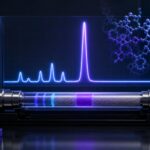
High-performance liquid chromatography (HPLC) is widely used to separate peptide-related substances.
During stability studies, researchers may compare chromatograms collected at different time points.
Changes may include:
- Reduction in the parent peptide peak
- Appearance of additional peaks
- Changes in relative peak areas
- Altered retention behaviour
What Is a Stability-Indicating HPLC Method?
A stability-indicating method is an analytical procedure demonstrated to measure the intended analyte appropriately in the presence of relevant degradation products and other components.
Does a New HPLC Peak Prove Degradation?
Not necessarily.
A new peak may be consistent with a degradation product, but its identity requires investigation.
It could also reflect another impurity, sample component or analytical issue.
HPLC retention time alone does not establish molecular identity.
2. LC-MS for Degradation Product Identification
Liquid chromatography–mass spectrometry (LC-MS) combines chromatographic separation with mass-related detection.
It can help researchers investigate the molecular masses of peptide-related substances.
What Can LC-MS Reveal?
LC-MS may help identify changes consistent with:
- Oxidation
- Deamidation
- Hydrolytic fragmentation
- Certain chemical modifications
For example, a mass increase of approximately 15.9949 Da may support a hypothesis involving the addition of an oxygen atom.
However, researchers must consider other possible explanations.
Why Is Tandem MS Useful?
Tandem mass spectrometry can provide additional structural information through peptide fragmentation.
This may help localise modifications or investigate the sequences of degradation fragments.
Some isomeric species still require specialised analysis.
3. Size-Exclusion Chromatography
Size-exclusion chromatography (SEC) separates substances according to their behaviour in a porous chromatographic system, commonly related to hydrodynamic size.
SEC is frequently used to investigate aggregation in suitable peptide and protein systems.
It can help distinguish some higher-molecular-size species from monomeric material.
However, the separation depends on the method and molecular behaviour.
Not every peptide aggregate is readily detected or quantified by SEC.
4. Dynamic Light Scattering
Dynamic light scattering (DLS) investigates fluctuations in scattered light to estimate particle-size-related properties in suitable dispersions.
It can provide information about larger molecular assemblies or particles.
However, DLS has limitations.
For example, a small amount of larger material can contribute disproportionately to the scattering signal.
Therefore, DLS results should be interpreted alongside complementary analytical data.
5. Functional Assays
Chemical analysis does not necessarily establish whether a peptide retains its expected biological activity.
Researchers may use a suitable functional assay to investigate activity over time.
Examples may involve:
- Receptor activation
- Enzyme inhibition
- Cell-based signalling
- Other defined biological responses
However, the assay must be appropriate to the scientific question.
A functional response is not a substitute for molecular identity or purity testing.
What Is Forced Degradation Testing?
Forced degradation testing deliberately exposes a material to selected stress conditions to investigate its susceptibility to chemical or physical change.
Researchers may examine stress associated with:
- Temperature
- pH
- Oxidation
- Light
- Moisture
- Other relevant conditions
The purpose is to investigate degradation pathways and support the development of stability-indicating analytical methods.
Is Forced Degradation the Same as Normal Storage?
No.
Forced degradation studies use deliberately challenging conditions.
They may reveal possible degradation products but do not necessarily predict how quickly those products will form under ordinary storage conditions.
Results must be interpreted in the context of the experimental design.
What Is the Difference Between Forced Degradation and Real-Time Stability Testing?
| Feature | Forced degradation | Real-time stability testing |
|---|---|---|
| Main purpose | Investigate degradation pathways and analytical selectivity | Evaluate changes under defined storage conditions |
| Conditions | Deliberately stressful | Intended or specified storage conditions |
| Typical focus | Potential degradation products | Actual stability over time |
| Shelf-life relevance | Supportive, not sufficient alone | Important when appropriately designed |
| Main limitation | May produce changes unrepresentative of normal storage | Requires sufficient observation time |
Accelerated stability testing is another approach that may support stability evaluation under appropriately justified conditions.
Can Peptide Degradation Be Predicted From Its Sequence?
Sequence information can help identify potential chemical vulnerabilities.
For example:
- Methionine may be susceptible to oxidation.
- Asparagine may be susceptible to deamidation.
- Cysteine may participate in disulphide chemistry.
- Certain aspartic acid-containing sequences may undergo isomerisation-related reactions.
However, sequence alone cannot reliably predict every degradation rate or product.
Local structure, formulation and environmental conditions also matter.
Experimental evidence remains essential.
Can Peptide Degradation Change Biological Activity?
Yes.
Degradation may alter a peptides ability to interact with a receptor or other molecular target.
Possible outcomes include:
- Reduced activity
- Loss of activity
- Altered activity
- Formation of species with different biological properties
However, the outcome depends on the particular degradation product and biological system.
It should not be assumed that every degradation product is inactive or that every modification causes the same effect.
Does Peptide Degradation Always Reduce HPLC Purity?
Not necessarily.
Some degradation products may be separated and detected as additional peaks.
However, others may:
- Co-elute with the parent peptide
- Produce a different detector response
- Fall outside the method’s detection capabilities
- Remain undetected under the selected conditions
Therefore, an unchanged HPLC area purity result does not automatically prove complete molecular stability.
The analytical method must be appropriate for the expected degradation pathways.
Can a Peptide Have High Purity but Poor Stability?
Yes.
Purity describes the composition of a material at a particular point in time under a defined analytical method.
Stability describes how relevant characteristics change over time.
A freshly purified peptide may have high initial chromatographic purity but degrade relatively quickly under certain conditions.
Conversely, a material may remain chemically stable while containing process-related impurities from manufacture.
Purity and stability answer different questions.
What Is the Difference Between Degradation and Impurities?
An impurity is a component other than the intended substance under a defined specification.
Impurities may originate from different sources.
Process-Related Impurities
These can arise during synthesis, purification or manufacturing.
Examples include certain deletion sequences or residual process-related substances.
Degradation-Related Impurities
These arise when the intended material changes during processing, handling or storage.
Examples may include oxidised or hydrolysed peptide species.
Why Does the Distinction Matter?
Knowing the source of an impurity can help researchers understand whether a problem originates during manufacture or develops over time.
What Is the Difference Between Peptide Degradation and Loss of Concentration?
A decrease in measured intact peptide concentration can occur for several reasons.
These include:
- Chemical degradation
- Adsorption
- Precipitation
- Aggregation
- Sample preparation losses
- Analytical variability
Therefore, a falling concentration does not independently establish chemical degradation.
Researchers may need to investigate both the parent peptide and potential degradation products.
Can Peptide Degradation Affect Molecular Weight?
Yes.
Some chemical degradation reactions change molecular mass.
Examples include:
| Degradation process | Possible mass-related observation |
|---|---|
| Oxidation involving one oxygen addition | Approximately +15.9949 Da |
| Deamidation of an amide side chain | Approximately +0.9840 Da |
| Peptide bond hydrolysis | Formation of fragments with different masses |
| Disulphide formation | Approximately −2.0157 Da relative to two reduced thiols |
| Isomerisation | May produce no molecular mass change |
| Non-covalent aggregation | Individual peptide molecular mass may remain unchanged |
Mass spectrometry is therefore valuable, but not sufficient for identifying every degradation pathway.
How Do Researchers Study Peptide Degradation Over Time?
A stability study may involve measuring selected quality attributes at defined time points.
Researchers may investigate:
- Intact peptide content
- Degradation product formation
- Chromatographic purity
- Molecular identity
- Aggregation
- Solubility
- Relevant biological activity
The study design depends on the material and intended application.
Why Are Multiple Time Points Important?
A single measurement provides information about one point in time.
Repeated measurements can reveal trends and support kinetic analysis.
However, trends must be interpreted alongside measurement uncertainty and analytical variability.
What Is a Peptide Degradation Profile?
A degradation profile describes the observed changes in a peptide and its related products under defined conditions.
It may include information about:
- Major degradation pathways
- Relevant degradation products
- Changes in intact peptide content
- Reaction rates
- Effects of environmental stress
- Analytical detectability
A degradation profile is specific to the peptide and the conditions studied.
It should not automatically be applied to unrelated sequences or formulations.
Why Is Peptide Degradation Important for Batch Quality?
Different batches may have different initial impurity profiles or stability characteristics.
Relevant influences can include:
- Manufacturing conditions
- Purification
- Residual moisture
- Counterion composition
- Packaging
- Formulation
- Other process-related factors
Batch-specific testing and traceability help researchers evaluate whether materials remain consistent with their intended specifications.
What Can a Certificate of Analysis Tell You About Degradation?
A Certificate of Analysis (COA) may report analytical results obtained for a particular batch.
These may include:
- Molecular identity
- HPLC purity
- Peptide content
- Selected impurities
- Water content
- Other specified tests
However, a COA typically provides a snapshot of the material under the conditions and at the time represented by the testing.
Does a COA Prove Long-Term Stability?
No.
A single COA does not establish a complete stability profile or justify a shelf life.
That requires appropriate stability data.
Does 99% Purity Mean a Peptide Cannot Degrade?
No.
A high purity value at one time point does not predict how the material will behave under future conditions.
Does Lyophilisation Prevent Peptide Degradation?
Lyophilisation can improve stability for certain peptide formulations by reducing water content and changing the physical environment.
However, it does not eliminate all degradation pathways.
Residual moisture, oxidation, physical instability and other changes may still occur.
The effectiveness of lyophilisation depends on the peptide and the complete formulation.
Does Peptide Degradation Mean a Sample Is Unsafe?
Degradation can alter the composition and properties of a material.
However, the implications depend on the degradation products, exposure context and intended use.
A degradation finding does not automatically establish a specific clinical risk.
Equally, the absence of detected degradation does not establish human safety.
Appropriate quality, toxicological and clinical evidence is required for medical applications.
Common Misunderstandings About Peptide Degradation
“Peptide Degradation Only Means Peptide Bonds Breaking”
Incorrect. Oxidation, deamidation and other chemical changes can occur without cleavage of the peptide backbone.
“All Peptides Degrade at the Same Rate”
Incorrect. Stability depends on sequence, formulation and environmental conditions.
“Freeze-Dried Peptides Cannot Degrade”
Incorrect. Lyophilised materials may still undergo chemical or physical changes.
“Refrigeration Completely Stops Degradation”
Incorrect. Some reactions may continue at reduced temperatures.
“If a Peptide Looks Normal, It Has Not Degraded”
Incorrect. Many degradation processes are not visible.
“A Matching Molecular Weight Proves Stability”
Incorrect. Some structural changes do not alter molecular mass.
“99% HPLC Purity Guarantees Long-Term Stability”
Incorrect. Purity at one time point does not establish future stability.
“Every New HPLC Peak Is a Degradation Product”
Incorrect. Additional peaks require appropriate identification and investigation.
“A Peptide That Has Not Degraded Is Automatically Safe for Human Use”
Incorrect. Chemical stability does not establish clinical safety or regulatory authorisation.
Frequently Asked Questions
What is peptide degradation?
Peptide degradation is the chemical or physical alteration of a peptide that changes its structure, composition or state.
What causes peptide degradation?
Causes can include hydrolysis, oxidation, deamidation, enzymatic activity and environmental stress.
What is peptide hydrolysis?
A chemical reaction in which water participates in breaking a bond, including peptide bonds.
What is peptide oxidation?
A chemical change involving oxidation of susceptible groups, such as certain amino acid side chains.
What is peptide deamidation?
A reaction in which an amide-containing group is converted into a related acidic structure.
Can peptides degrade without breaking peptide bonds?
Yes. Oxidation, deamidation and certain other changes may leave the backbone intact.
Can peptides degrade in powder form?
Yes. Dried materials can still undergo chemical or physical changes.
Does temperature affect peptide degradation?
Yes. Temperature can influence reaction rates and physical stability.
Does pH affect peptide stability?
Yes. pH can influence chemical reactions, solubility and molecular interactions.
Can light cause peptide degradation?
Yes, for susceptible peptides under relevant conditions.
What is peptide aggregation?
The association of peptide molecules into larger assemblies.
Is aggregation the same as chemical degradation?
Not necessarily. Aggregation can occur without a change in covalent structure.
How do laboratories detect peptide degradation?
Common methods include HPLC, LC-MS, tandem MS and other appropriate stability-indicating techniques.
Can HPLC identify degradation products?
HPLC can separate some degradation products, but identification generally requires additional evidence.
What is forced degradation testing?
Testing that deliberately exposes a material to selected stresses to investigate degradation pathways.
Can mass spectrometry detect peptide oxidation?
Yes. It can detect mass changes consistent with certain oxidation products.
Does high purity mean a peptide is stable?
No. Purity and stability are separate properties.
Can degradation affect biological potency?
Yes. Chemical or physical changes may alter functional activity.
Does a COA prove a peptide will remain stable?
No. A COA alone does not establish long-term stability.
Does peptide stability prove suitability for human use?
No. Stability testing does not establish sterility, clinical safety or regulatory approval.
Conclusion: Understanding Peptide Degradation
Peptide degradation is an important consideration in molecular research, synthetic peptide manufacturing and laboratory quality assessment.
Peptides can undergo chemical changes such as hydrolysis, oxidation, deamidation and isomerisation.
They may also experience physical instability through aggregation, precipitation or adsorption.
These processes can affect molecular identity, intact peptide concentration, purity and biological activity.
However, degradation pathways differ between peptides.
A sequence’s susceptibility depends on its chemical structure and environmental conditions.
This is why researchers use stability studies and complementary analytical techniques to investigate how peptide materials change over time.
HPLC can help detect changes in chromatographic profiles, while LC-MS and tandem mass spectrometry can provide information about molecular mass and structure.
Other methods may be needed to investigate aggregation, solubility and functional activity.
Importantly, a high initial purity result does not establish long-term stability, and chemical stability does not establish clinical safety.
At Peptides UK, our Peptide Knowledge Hub explores the scientific principles behind peptide chemistry, analytical testing and laboratory quality through accessible, evidence-focused educational content.
Understanding peptide degradation helps readers interpret stability reports, recognise the limitations of purity testing and appreciate why reliable peptide research depends on appropriate material characterisation over time.
Scientific References and Further Reading
1. Manning MC, Chou DK, Murphy BM, Payne RW, Katayama DS. (2010). Stability of protein pharmaceuticals: An update. Pharmaceutical Research, 27, 544–575.
https://doi.org/10.1007/s11095-009-0045-6
2. Wakankar AA, Borchardt RT. (2006). Formulation considerations for proteins susceptible to asparagine deamidation and aspartate isomerization. Journal of Pharmaceutical Sciences, 95(11), 2321–2336.
https://doi.org/10.1002/jps.20740
3. Robinson NE, Robinson AB. (2001). Molecular clocks. Proceedings of the National Academy of Sciences, 98(3), 944–949.
https://doi.org/10.1073/pnas.98.3.944
4. Blessy M, Patel RD, Prajapati PN, Agrawal YK. (2014). Development of forced degradation and stability indicating studies of drugs—A review. Journal of Pharmaceutical Analysis, 4(3), 159–165.
https://doi.org/10.1016/j.jpha.2013.09.003
5. International Council for Harmonisation (ICH). Q1A(R2): Stability Testing of New Drug Substances and Products.
https://www.ich.org/page/quality-guidelines
6. International Council for Harmonisation (ICH). Q1B: Photostability Testing of New Drug Substances and Products.
https://www.ich.org/page/quality-guidelines
7. International Council for Harmonisation (ICH). Q2(R2): Validation of Analytical Procedures.
https://www.ich.org/page/quality-guidelines
8. International Council for Harmonisation (ICH). Q14: Analytical Procedure Development.
https://www.ich.org/page/quality-guidelines
9. International Council for Harmonisation (ICH). Q5C: Stability Testing of Biotechnological/Biological Products.
https://www.ich.org/page/quality-guidelines
Research and Safety Disclaimer
This article is intended for general scientific and educational purposes only and does not constitute medical advice.
Peptide degradation and stability testing are important components of laboratory quality assessment, but they do not independently establish biological potency, sterility, pharmaceutical-grade manufacturing, clinical effectiveness or human safety.
Some peptide-based medicines have regulatory authorisation for specific indications, while other compounds remain investigational.
Materials designated strictly for laboratory research must not be assumed suitable for human administration.
Analytical purity, stability results, Certificates of Analysis and research-use labels do not constitute evidence of clinical safety or regulatory approval.
This article does not recommend obtaining, administering or self-experimenting with unapproved peptide preparations.