Peptides UK | Peptide Knowledge Hub
In peptide research, the terms TB-500 and thymosin beta-4 are frequently mentioned together.
They are closely related, but an important scientific distinction is often overlooked: the two names do not necessarily describe the same molecule.
Thymosin beta-4 is a naturally occurring peptide consisting of 43 amino acids. In analytical research, TB-500 has been identified as a much shorter synthetic fragment containing seven amino acids.
However, the name TB-500 is also used inconsistently in some commercial descriptions, occasionally referring to full-length thymosin beta-4 rather than the shorter fragment.
This creates confusion when interpreting molecular structures, laboratory testing results and scientific studies.
Understanding the distinction is particularly important because findings obtained using full-length thymosin beta-4 cannot automatically be applied to the shorter TB-500 fragment.
So, what is thymosin beta-4, what is TB-500, and why does their molecular identity matter?
In this guide, Peptides UK examines their amino acid sequences, molecular structures, proposed biological functions, preclinical research and the analytical methods used to distinguish them.
What Is Thymosin Beta-4?
Thymosin beta-4 (Tβ4) is a naturally occurring peptide composed of 43 amino acids.
It belongs to the beta-thymosin family and is associated with the regulation of actin, a protein involved in cellular structure and movement.
Thymosin beta-4 is found in numerous tissues and cell types.
Its biological functions have attracted research interest in areas including:
- Actin regulation
- Cell migration
- Cytoskeletal organisation
- Tissue repair processes
- Angiogenesis-related signalling
- Inflammatory responses
- Experimental wound models
However, the presence of a peptide in normal biological systems does not establish that administering additional quantities is safe or beneficial.
Endogenous biological function and the effects of an externally administered preparation are separate scientific questions.
What Is TB-500?
TB-500 is a designation used in analytical literature for a synthetic, N-terminally acetylated seven-amino-acid fragment corresponding to residues 17–23 of thymosin beta-4.
The fragment is commonly represented as:
Ac-LKKTETQ
The letters correspond to the amino acids:
- L — Leucine
- K — Lysine
- K — Lysine
- T — Threonine
- E — Glutamic acid
- T — Threonine
- Q — Glutamine
The prefix Ac- indicates an acetyl modification at the peptides N-terminus.
This modification forms part of the molecular identity of the characterised fragment.
Importantly, the name TB-500 is not consistently applied across all commercial and informal sources.
Some descriptions use TB-500 for full-length thymosin beta-4, while others use it for the seven-residue fragment.
For reliable scientific interpretation, researchers should identify the exact amino acid sequence rather than rely on the name alone.
TB-500 vs Thymosin Beta-4: What Is the Difference?
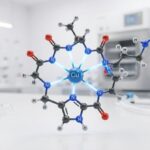
The clearest distinction is their molecular structure.
| Characteristic | Thymosin beta-4 | TB-500 fragment |
|---|---|---|
| Molecular type | Naturally occurring peptide | Synthetic peptide fragment |
| Amino acid length | 43 | 7 |
| Sequence | Full thymosin beta-4 sequence | Ac-LKKTETQ |
| Relationship | Parent peptide | Derived from residues 17–23 |
| Approximate molecular mass | 4,963 Da | 889 Da |
| Biological research | Broad preclinical literature and some human investigations of specific formulations | Much more limited fragment-specific evidence |
| Are they identical? | No | No |
These are different molecular entities.
They share part of an amino acid sequence, but their overall structures are not the same.
What Is the Amino Acid Sequence of Thymosin Beta-4?
The mature human thymosin beta-4 sequence contains 43 amino acids.
In one-letter notation, it is:
SDKPDMAEIEKFDKSKLKKTETQEKNPLPSKETIEQEKQAGES
The naturally occurring mature peptide is N-terminally acetylated.
Within this sequence, residues 17–23 form the segment:
LKKTETQ
This region corresponds to the sequence used in the synthetic TB-500 fragment, with its own N-terminal acetyl modification.
The relationship can be represented as:
Full-length thymosin beta-4: 43 amino acids
TB-500 fragment: 7 amino acids corresponding to positions 17–23
The shorter fragment does not contain the remaining amino acids of the full-length peptide.
Why Does Amino Acid Sequence Matter?
A peptides amino acid sequence is a fundamental determinant of its molecular properties.
Sequence influences:
- Molecular mass
- Chemical charge
- Three-dimensional interactions
- Solubility
- Stability
- Interactions with other molecules
- Susceptibility to enzymatic degradation
Two peptides that share several amino acids are not necessarily biologically interchangeable.
For example, a seven-residue fragment may behave differently from the 43-residue parent peptide because it lacks other structural regions.
Chemical modifications can also influence molecular behaviour.
This is why accurate sequence identification is essential when comparing scientific studies.
What Is the Actin-Binding Region of Thymosin Beta-4?
One of the best-studied biological functions of thymosin beta-4 involves its interaction with actin.
Actin is a protein that contributes to cellular structure, movement and organisation.
Actin exists in different forms, including:
- G-actin: Individual globular actin molecules
- F-actin: Filamentous structures formed through actin polymerisation
Thymosin beta-4 can bind G-actin and influence the availability of actin monomers for filament formation.
This process is relevant to cellular movement and cytoskeletal organisation.
The central region of thymosin beta-4 includes an important actin-interaction motif.
The TB-500 fragment overlaps this region.
However, containing part of an actin-binding sequence does not prove that the shorter fragment reproduces all the binding characteristics or biological functions of full-length thymosin beta-4.
Does TB-500 Have the Same Biological Effects as Thymosin Beta-4?
This has not been established.
The full-length peptide and the shorter fragment have different molecular structures.
Although they share a sequence region, this does not demonstrate identical:
- Target interactions
- Binding affinity
- Cellular uptake
- Biological potency
- Stability
- Distribution
- Metabolism
- Safety characteristics
Some research into thymosin beta-4-derived fragments has identified biological activities associated with particular sequences.
However, results involving one fragment should not automatically be applied to another.
Likewise, findings from full-length thymosin beta-4 studies should not be described as direct evidence for TB-500 unless the investigated material was correctly identified as that specific fragment.
Why Are TB-500 and Thymosin Beta-4 Often Confused?
There are several reasons.
1. Shared Amino Acid Sequences
TB-500 contains a sequence derived from thymosin beta-4.
This molecular relationship can create the impression that the substances are interchangeable.
2. Inconsistent Naming
The term TB-500 is used inconsistently in some commercial and informal descriptions.
Without sequence information, the name alone may be ambiguous.
3. Overlapping Research Discussions
Articles discussing tissue repair sometimes combine research involving full-length thymosin beta-4 with discussions of TB-500.
This can obscure which substance was actually investigated.
4. Similar Scientific Terminology
Terms such as fragment, analogue, derivative and synthetic peptide are sometimes used without sufficient explanation.
5. Limited Fragment-Specific Evidence
The shorter TB-500 fragment has a much smaller direct evidence base than the full-length parent peptide.
As a result, some discussions incorrectly transfer findings from one molecule to the other.
What Has Thymosin Beta-4 Research Investigated?
Thymosin beta-4 has been investigated in several areas of laboratory and preclinical research.
These include cellular movement, tissue repair, vascular signalling and inflammatory processes.
Cell Migration
Cell migration is important in development, tissue maintenance and repair.
Because thymosin beta-4 interacts with actin, researchers have examined its relationship with processes involved in cellular movement.
Experimental Wound Repair
Some studies have investigated thymosin beta-4 in laboratory and animal models of tissue injury.
Researchers have measured outcomes such as epithelial responses, cell migration and tissue organisation.
Angiogenesis
Angiogenesis refers to the formation of new blood vessels from existing vessels.
Thymosin beta-4 has been studied in relation to vascular biology and angiogenesis-associated signalling.
Inflammatory Responses
Researchers have explored whether thymosin beta-4 influences selected inflammatory pathways in experimental systems.
Cardiac and Tissue Biology
Preclinical studies have also examined thymosin beta-4 in models involving cardiac tissue and other organ systems.
However, these findings should not be interpreted as established therapeutic effects in humans.
Has Thymosin Beta-4 Been Studied in Humans?
Some human clinical investigations have examined thymosin beta-4 or specific thymosin beta-4 formulations.
For example, ophthalmic research has investigated formulations containing thymosin beta-4 for certain ocular surface conditions.
These investigations are distinct from research involving the shorter TB-500 fragment.
The existence of human studies involving full-length thymosin beta-4 does not establish that TB-500 has the same safety profile or clinical effects.
Nor does a clinical investigation necessarily mean that a product has demonstrated effectiveness or received regulatory authorisation.
Study design, population, formulation and outcomes all matter.
What Has TB-500-Specific Research Investigated?
The TB-500 fragment has appeared prominently in analytical chemistry and anti-doping research.
A notable 2012 study identified the N-terminally acetylated thymosin beta-4 fragment corresponding to residues 17–23 in a material described as TB-500.
The researchers used chromatographic and mass spectrometric techniques to characterise the substance.
This work was important because it helped establish the molecular identity of a material associated with the TB-500 name.
However, analytical identification is not the same as demonstrating biological effectiveness.
Evidence showing that a molecule can be identified and measured does not establish that it produces a particular therapeutic effect.
What Is the Difference Between a Peptide Fragment and an Analogue?
These terms describe different molecular relationships.
Peptide Fragment
A peptide fragment is a shorter sequence derived from, or corresponding to part of, a longer peptide or protein.
The seven-residue TB-500 sequence corresponds to a region of thymosin beta-4.
Peptide Analogue
A peptide analogue is a molecule structurally related to another peptide, potentially incorporating substitutions or other modifications.
An analogue may be designed to investigate particular molecular properties.
Peptide Derivative
A peptide derivative is a broader term describing a molecule chemically related to a parent peptide.
For example, acetylation can produce a modified peptide derivative.
These categories can overlap.
The most reliable way to identify a research material is to specify its exact molecular structure.
Is TB-500 the Same as Ac-SDKP?
No.
Ac-SDKP is another peptide fragment associated with thymosin beta-4 biology.
It corresponds to an N-terminal four-amino-acid sequence:
Ac-SDKP
This is different from the TB-500 fragment:
Ac-LKKTETQ
The two fragments originate from different regions of thymosin beta-4.
They also have different molecular structures.
Research involving Ac-SDKP should not automatically be treated as evidence for TB-500.
Is TB-500 the Same as Thymosin Alpha-1?
No.
Thymosin alpha-1 and thymosin beta-4 are different peptides.
Thymosin alpha-1 contains 28 amino acids and has been investigated in immunological research.
Thymosin beta-4 contains 43 amino acids and is associated with actin regulation and other biological processes.
The TB-500 fragment contains seven amino acids.
Despite the similar naming, these substances have distinct molecular identities and research histories.
Why Is Molecular Identity Important in Peptide Research?
Scientific reproducibility depends on researchers studying correctly characterised materials.
If two laboratories use substances described by the same name but containing different amino acid sequences, their results may not be directly comparable.
For example, a study involving full-length thymosin beta-4 cannot automatically be reproduced using the seven-residue TB-500 fragment.
The two materials may differ in their physical, chemical and biological properties.
Accurate molecular identification is therefore fundamental to meaningful research comparisons.
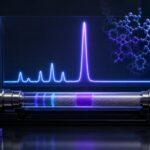
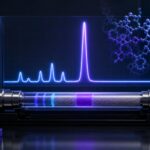
How Can Laboratories Distinguish TB-500 From Thymosin Beta-4?
Laboratories may use several analytical techniques.
Mass Spectrometry
Mass spectrometry measures mass-to-charge ratios and can provide information about molecular mass.
Full-length thymosin beta-4 and the seven-residue TB-500 fragment have substantially different molecular masses.
This makes mass spectrometry useful for investigating their identities.
However, mass measurement alone may not establish every structural detail.
Liquid Chromatography–Mass Spectrometry
LC-MS combines chromatographic separation with mass-based analysis.
It can help distinguish peptide components and investigate molecular identity.
Tandem Mass Spectrometry
Tandem mass spectrometry, or MS/MS, can provide information about peptide sequence through fragmentation patterns.
This can support identification of specific amino acid arrangements.
HPLC
HPLC can help separate peptide-related components.
However, retention time alone does not conclusively establish molecular identity.
Additional Structural Characterisation
Depending on the research objective, other analytical approaches may be required.
The analytical method should be suitable for the molecular distinction being investigated.
Can a Certificate of Analysis Confirm Whether a Material Is TB-500?
A Certificate of Analysis (COA) may provide evidence supporting the identity of a peptide material.
Relevant information may include:
- Full peptide name
- Exact amino acid sequence
- Molecular mass
- Chemical modifications
- Batch or lot number
- Analytical method
- HPLC results
- Mass spectrometry data
- Testing date
However, the name TB-500 alone is not sufficient to resolve the distinction between full-length thymosin beta-4 and the shorter fragment.
Researchers should examine the molecular information reported.
A COA also does not automatically establish sterility, biological potency or clinical safety.
Why Does Molecular Mass Matter?
Molecular mass is an important characteristic of peptide identity.
The approximate molecular masses are:
- Full-length thymosin beta-4: 4,963 daltons
- Acetylated TB-500 fragment: 889 daltons
These values are substantially different.
Mass spectrometry can therefore help determine whether a material is consistent with the full-length peptide or the shorter fragment.
However, molecular mass must be interpreted alongside chemical modifications, ionisation states and other analytical information.
Two different peptide sequences can sometimes have the same or similar masses.
Does High HPLC Purity Prove a Sample Is the Correct Peptide?
No.
HPLC purity and molecular identity are separate analytical questions.
A sample could contain a dominant chromatographic component while still being incorrectly labelled.
For example, a highly pure seven-residue peptide would not become full-length thymosin beta-4 simply because its chromatogram showed a single major peak.
Likewise, a high-purity full-length peptide would not be equivalent to the shorter fragment.
Appropriate identity testing is needed to establish which molecule is present.
Does TB-500 Have a Confirmed Mechanism of Action in Humans?
A complete, clinically validated mechanism of action for the seven-residue TB-500 fragment has not been established.
Although the fragment overlaps an actin-interaction region of thymosin beta-4, this does not demonstrate that it reproduces all the parent peptides biological functions.
Questions remain about its direct molecular interactions, biological activity, metabolism and effects in humans.
Researchers should distinguish mechanistic hypotheses from experimentally demonstrated findings.
What Are the Limitations of TB-500 Research?
Several limitations are important.
Limited Fragment-Specific Evidence
The seven-residue fragment has not been investigated as extensively as full-length thymosin beta-4.
Inconsistent Terminology
Studies and commercial descriptions may use different naming conventions.
Uncertain Biological Translation
Findings involving the parent peptide cannot automatically be transferred to the fragment.
Limited Human Safety Evidence
Reliable human safety information for the fragment is insufficient.
Analytical Quality Concerns
Peptide-related impurities, aggregation and differences between preparations may complicate interpretation.
These limitations make careful source evaluation essential.
Is TB-500 an Approved Medicine in the UK?
The TB-500 fragment is not an MHRA-authorised medicine for treating human medical conditions in the UK.
Full-length thymosin beta-4 research should also not be interpreted as regulatory approval for TB-500.
Medicines authorisation requires appropriate evidence concerning quality, safety and efficacy.
A research-use designation does not automatically make the supply or promotion of a substance lawful for every intended purpose.
Is TB-500 Prohibited in Sport?
Thymosin beta-4 and its derivatives, including TB-500, are included in the World Anti-Doping Agency’s prohibited framework.
This is relevant to athletes and other individuals subject to anti-doping rules.
The presence of a substance on a prohibited list is a separate question from whether it has demonstrated clinical effectiveness.
What Are the Safety Concerns Surrounding TB-500?
The safety of the TB-500 fragment in humans has not been adequately established.
The US Food and Drug Administration has identified concerns involving potential immunogenicity, aggregation and peptide-related impurities.
The agency has also reported a lack of identified human exposure data for drug products containing the thymosin beta-4 fragment LKKTETQ.
Potential uncertainties include:
- Short-term and long-term effects
- Immune responses
- Off-target biological effects
- Impurity-related risks
- Formulation differences
- Unknown clinical pharmacokinetics
- Inadequate human safety evidence
These uncertainties should not be minimised because the fragment is derived from a naturally occurring peptide.
Common Misunderstandings About TB-500 and Thymosin Beta-4
“TB-500 and Thymosin Beta-4 Are Always the Same Molecule”
Incorrect. Analytical literature identifies TB-500 as a seven-residue acetylated fragment, although the name is also used inconsistently elsewhere.
“Research on Thymosin Beta-4 Proves TB-500 Works”
Incorrect. Results involving the full-length peptide cannot automatically establish the effects of the shorter fragment.
“Both Peptides Have the Same Molecular Mass”
Incorrect. Their molecular masses differ substantially.
“A High Purity Result Confirms the Correct Identity”
Incorrect. Purity and identity require separate analytical consideration.
“A Naturally Occurring Parent Peptide Makes Its Fragment Safe”
Incorrect. Structural relationships do not establish human safety.
“A COA Proves Clinical Effectiveness”
Incorrect. A COA reports specified analytical findings, not clinical outcomes.
Frequently Asked Questions
What is TB-500?
TB-500 is a name used in analytical literature for an acetylated seven-amino-acid fragment corresponding to residues 17–23 of thymosin beta-4. The term is also used inconsistently in some commercial descriptions.
What is thymosin beta-4?
Thymosin beta-4 is a naturally occurring 43-amino-acid peptide involved in actin regulation and other biological processes.
Is TB-500 the same as thymosin beta-4?
Not when TB-500 refers to the characterised seven-residue fragment. The two are structurally distinct.
How many amino acids are in TB-500?
The commonly characterised TB-500 fragment contains seven amino acids.
How many amino acids are in thymosin beta-4?
Full-length thymosin beta-4 contains 43 amino acids.
What is the TB-500 amino acid sequence?
The characterised acetylated fragment is Ac-LKKTETQ.
Why is TB-500 associated with thymosin beta-4?
Its amino acid sequence corresponds to a region within the full-length thymosin beta-4 peptide.
Does TB-500 have the same effects as thymosin beta-4?
Equivalent biological effects have not been established.
Is TB-500 the same as Ac-SDKP?
No. Ac-SDKP is a different thymosin beta-4-derived fragment.
Is TB-500 the same as thymosin alpha-1?
No. They are different peptides with different molecular structures.
Can mass spectrometry distinguish TB-500 from thymosin beta-4?
Yes. Their substantially different molecular masses can help distinguish them, although appropriate analytical characterisation remains necessary.
Does 99% HPLC purity confirm TB-500 identity?
No. High chromatographic purity does not independently establish the exact amino acid sequence.
Is TB-500 approved for human use in the UK?
No. The TB-500 fragment is not an MHRA-authorised medicine.
Is TB-500 safe for human use?
Its human safety has not been adequately established.
Conclusion: Why the TB-500 and Thymosin Beta-4 Distinction Matters
TB-500 and thymosin beta-4 are closely related in sequence, but they should not automatically be treated as the same substance.
Full-length thymosin beta-4 contains 43 amino acids and has been investigated in research involving actin regulation, cellular movement and tissue biology.
The TB-500 fragment characterised in analytical literature contains seven amino acids and corresponds to residues 17–23 of the parent peptide, with an N-terminal acetyl modification.
This structural difference matters when interpreting laboratory data, scientific studies and Certificates of Analysis.
Research involving one molecule cannot automatically establish the biological activity, safety or clinical effectiveness of the other.
For accurate peptide research, molecular identity should be established through suitable analytical methods rather than inferred from naming conventions.
At Peptides UK, our Peptide Knowledge Hub is dedicated to explaining peptide science, molecular structure and laboratory quality through clear, accessible and evidence-focused educational content.
Understanding the distinction between related peptides is an essential part of interpreting scientific research responsibly.
Scientific References and Further Reading
1. Esposito S, et al. (2012). Synthesis and characterization of the N-terminal acetylated 17-23 fragment of thymosin beta 4 identified in TB-500, a product suspected to possess doping potential. Drug Testing and Analysis.
https://pubmed.ncbi.nlm.nih.gov/22962027/
2. UniProt. Human thymosin beta-4 protein record, P62328.
https://www.uniprot.org/uniprotkb/P62328/entry
3. US Food and Drug Administration. Certain Bulk Drug Substances for Use in Compounding That May Present Significant Safety Risks.
https://www.fda.gov/drugs/human-drug-compounding/certain-bulk-drug-substances-use-compounding-may-present-significant-safety-risks
4. World Anti-Doping Agency. Prohibited List.
https://www.wada-ama.org/en/prohibited-list
5. Medicines and Healthcare products Regulatory Agency. UK medicines regulation and authorisation.
https://www.gov.uk/government/organisations/medicines-and-healthcare-products-regulatory-agency
Research and Safety Disclaimer
This article is intended for general scientific and educational purposes only and does not constitute medical advice.
TB-500 is an experimental peptide fragment. Research findings involving thymosin beta-4 or related fragments do not establish that TB-500 is safe or effective for human use.
The TB-500 fragment is not an MHRA-authorised medicine for treating human medical conditions. Nothing in this article constitutes a recommendation to obtain, administer or self-experiment with TB-500.
Analytical purity, molecular identity testing and laboratory documentation should not be interpreted as evidence of sterility, pharmaceutical-grade manufacturing, clinical safety or suitability for human administration.